The Sharp End.
Winter Climbing the Polish Tatras, December 2025
My love of winter climbing began here. 2 years ago, after seeing a Netflix documentary about alpinism, I thought I might like it. I was in Poland at the time, searched the internet and discovered the Polish and Slovakian Tatras are home to plenty of ice climbing and alpinism and found a guide, Maciek to show me the ropes. At the time I was terrified of heights. I didn’t trust a rope to hold my bodyweight and so every step, though safe as can be thanks to Maciek’s dilligent belay, felt as serious and deadly as free soloing.
Since then, I have been fortunate to be able to invest in a good number of guided days of climbing, of all kinds, in many places. When guided, you are usually the “follower”. The guide does the much more dangerous work of leading, where falls can be much more consequential and installs the anchor to safely belay you up from above.
For me, the ultimate goal is to develop the skills and strength to be able to put my big boy pants on and be on the sharp end, leading.
Fortunately, my friend Richard was keen to join in on the adventure and discover Winter Climbing in the Tatras while I led and so 6 days of climbing was planned.
N.B This website is created on our sponsor’s platform, Squarespace. If you would like to build a website to sell your products or document your adventures like this go to http://squarespace.com/forge and use code “Forge” for 10% off.
I am hydrated with the electrolytes from our sponsor LMNT. Get a free sample pack with any purchase at: https://drinklmnt.com/forge
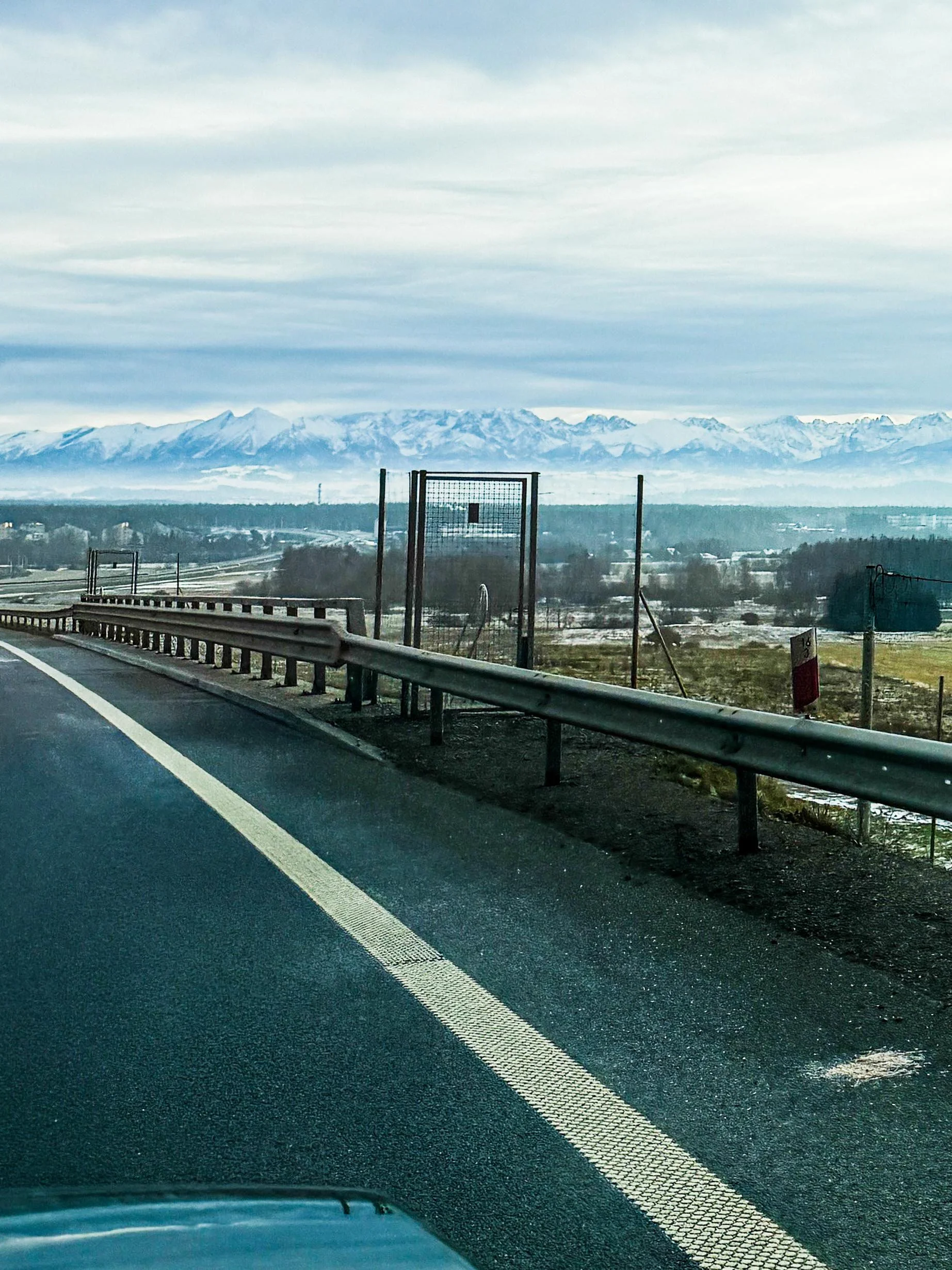
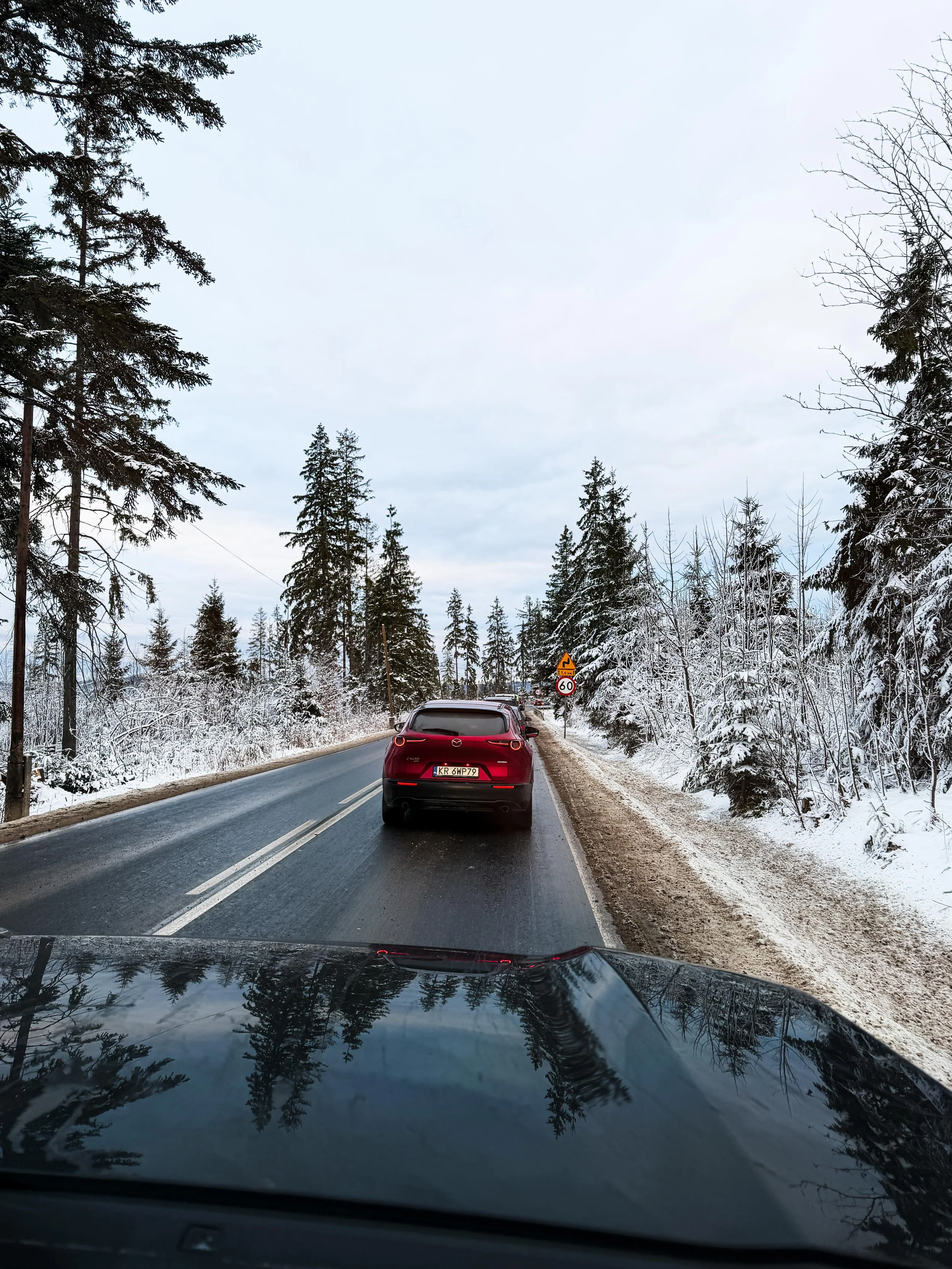
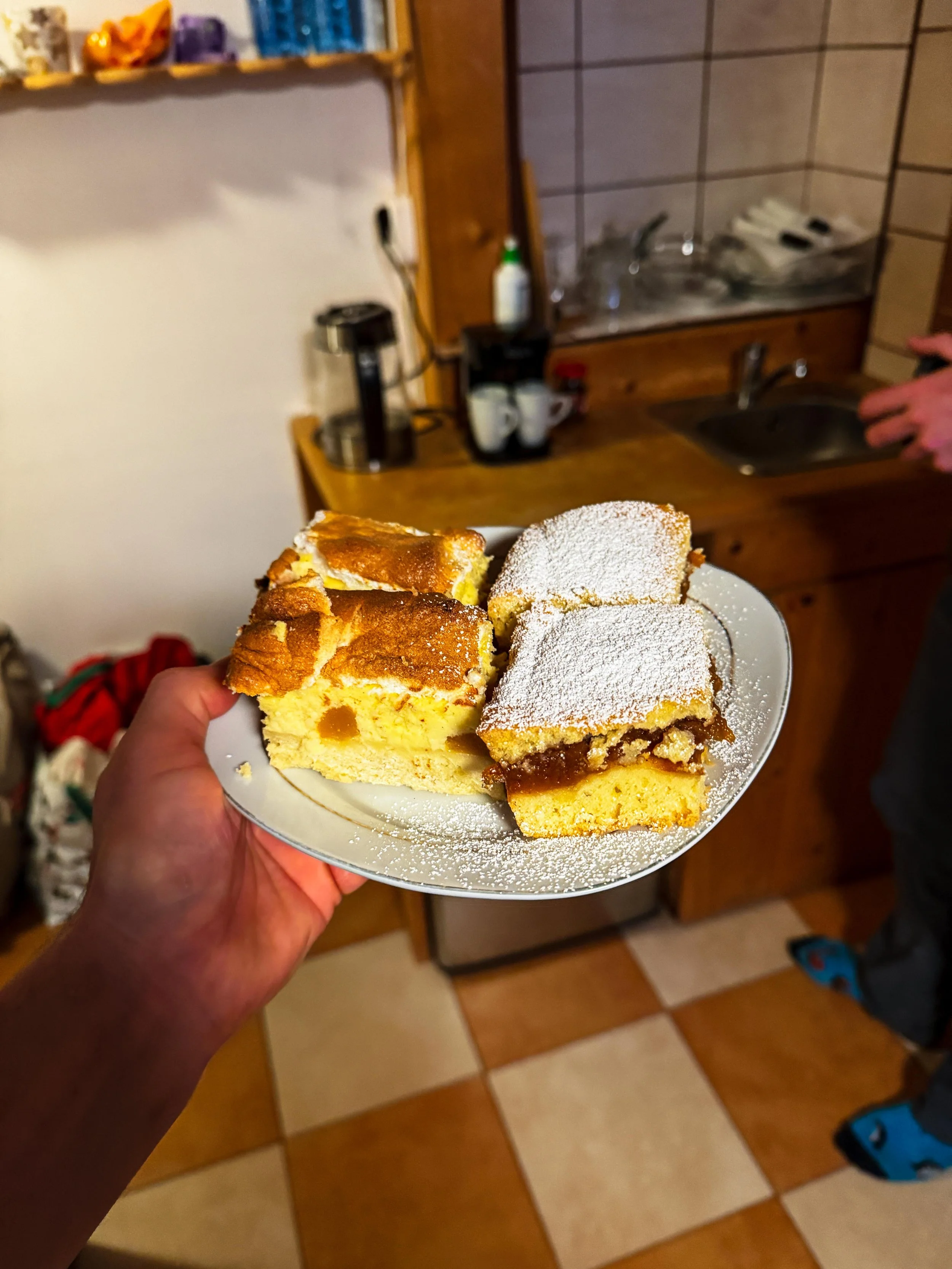
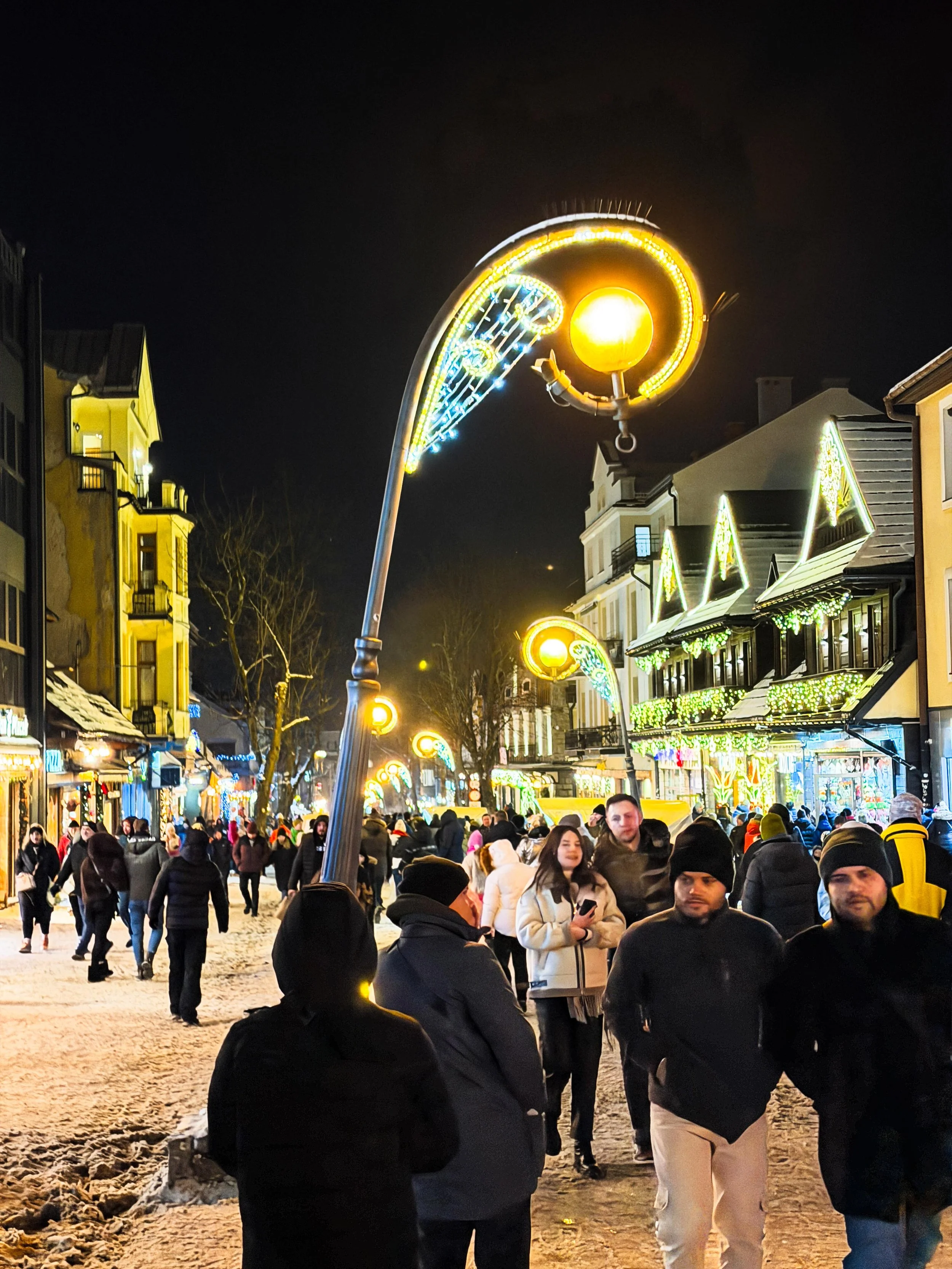
I picked up Richard from Krakow Airport and we drove down the Zakopianska road towards Zakopane. The Tatra range is not enourmous, but it is certainly large enough to fill many lifetimes with adventure. It juts out from the rolling hills between Krakow in an inspiring way, a feast for the eyes on the drive down. The host of the AirBnB provided us freshly baked gifts to welcome us to the town of Murzachile, 15 minutes east of Zakopane.
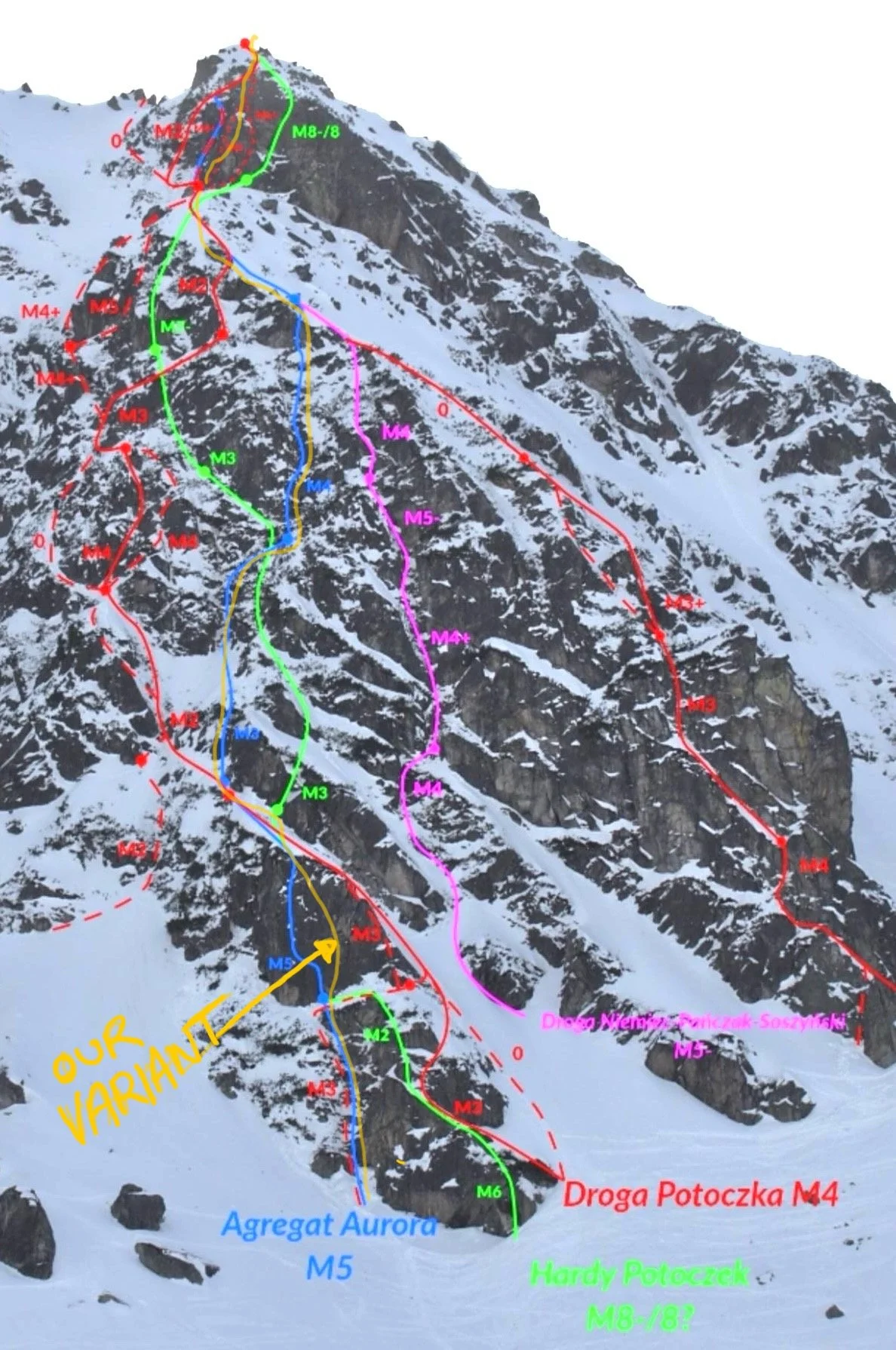
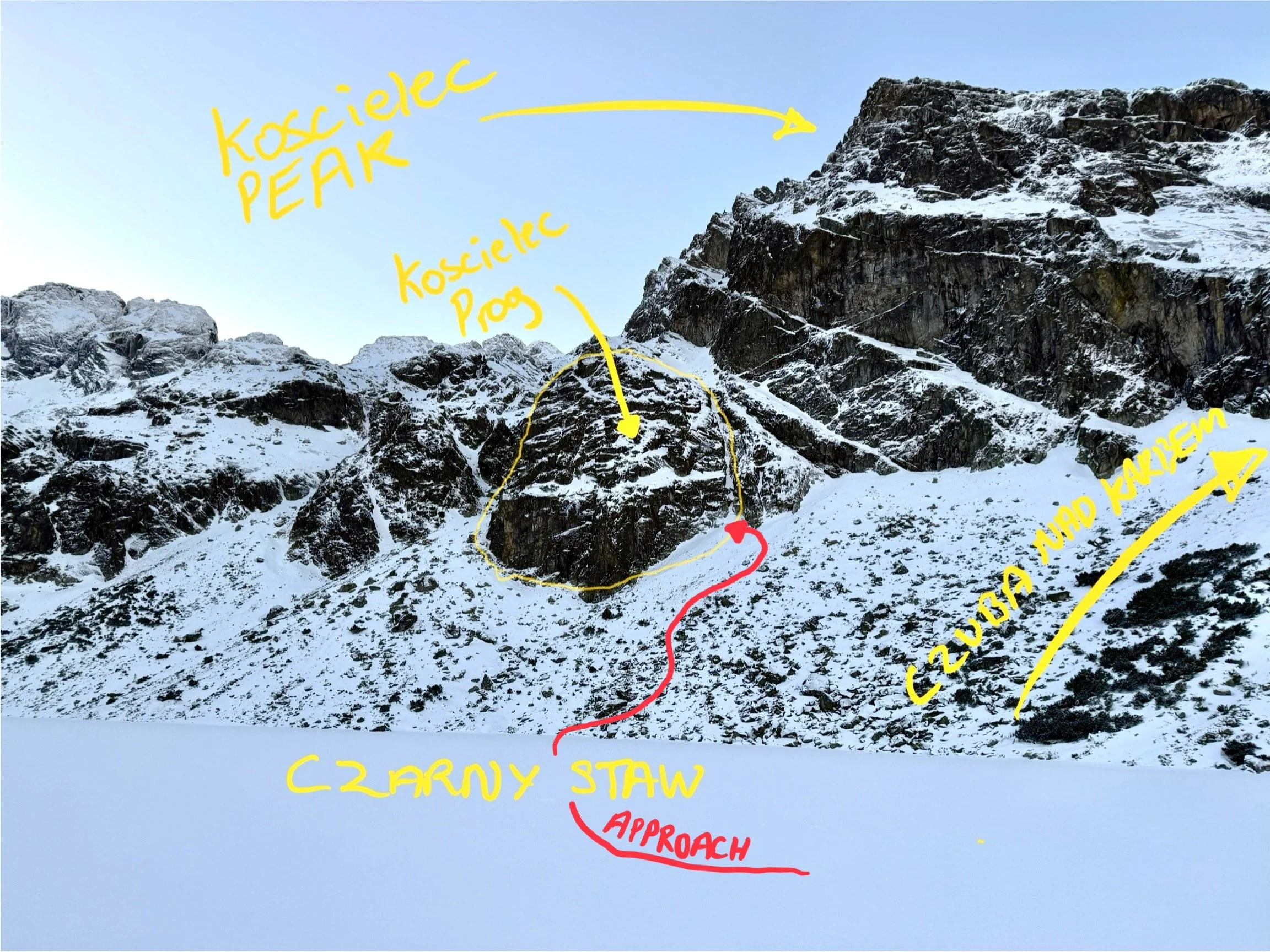
Topo to the right from https://drytooling.pl/baza/topo/tatry/2575-droga-potoczka-czuba-nad-karbem our variation annotated in yellow.
Day 1: Czuba Nad Karbem M5+ Variation
On the first day, we planned to warm up by climbing in an area I had climbed twice with Maciek while being guided. In the valley of “Hala Gasienecowy”, above the “Czarny Staw” Black Lake. The approach begun at 5:20am at the trailhead towards the Murowaniec hut. A parking attendant met me at the side of the road and pointed the spot out he wanted me to leave the car. 10 or 15 euros secured the day’s parking and we were off. We made a crucial mistake though. Not knowing the state of the trail up into the mountains, I decided to wear my B3 climbing boots to make sure I wouldn’t get wet feet in any deep snow. These are completely ridgid boots with a gaiter. They are essential for climbing in crampons or in the cold. But when you’ve got a 21 km day ahead: it’s going to be painful. It certainly was painful. Despite my best efforts to have my feet tough before the trip, my heels blistered far too quickly and my calves screamed. The trail was pefectly groomed from tons of foot traffic and wearing trail runners on our feet would have been a much better choice for the approach.
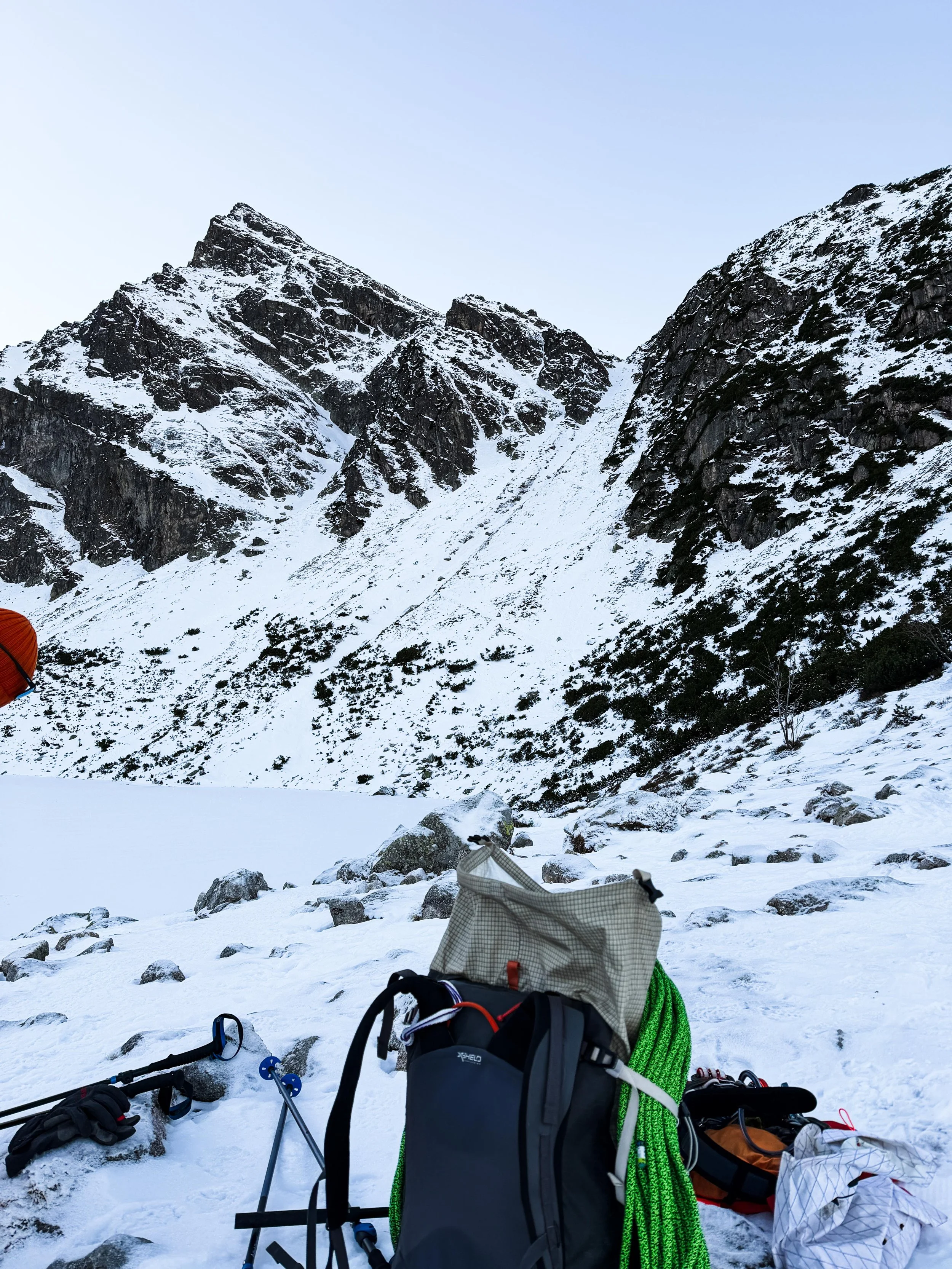
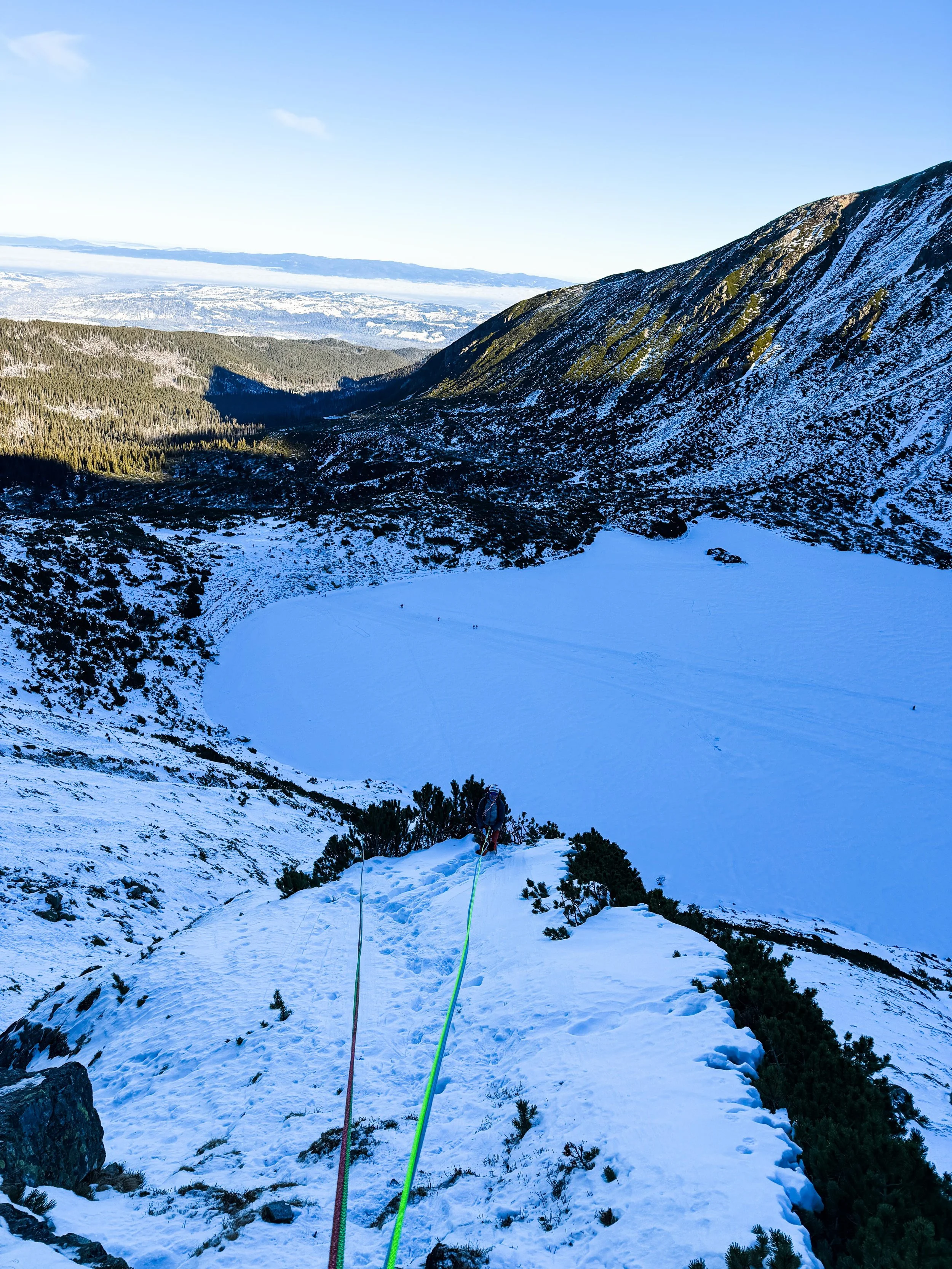
We arrived at the Hala Gasienecowy valley and spotted our mission, the “Czuba Nad Karbem”. "The Tuft under Carp”. It is a rock outcrop in the middle of the above photo, beneath the “Karb” Carp Saddle, underneath the promonent Koscielec mountain to the left. As we prepared to switch into crampons and approach the face, we met a team of friendly Polish climbers with a simmilar plan for the day. They set off ahead and we met them at the base of the route as they began their first pitch.
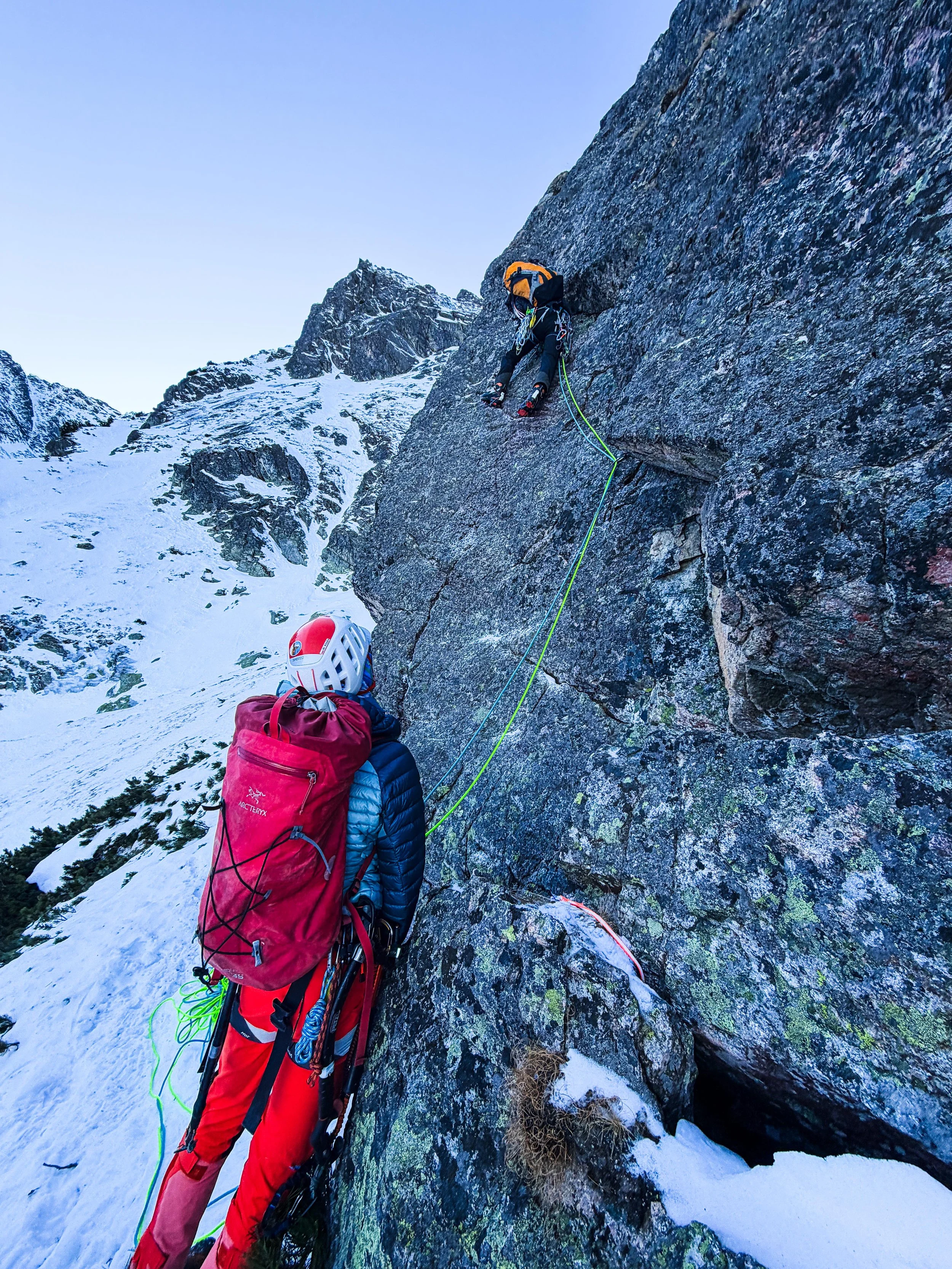
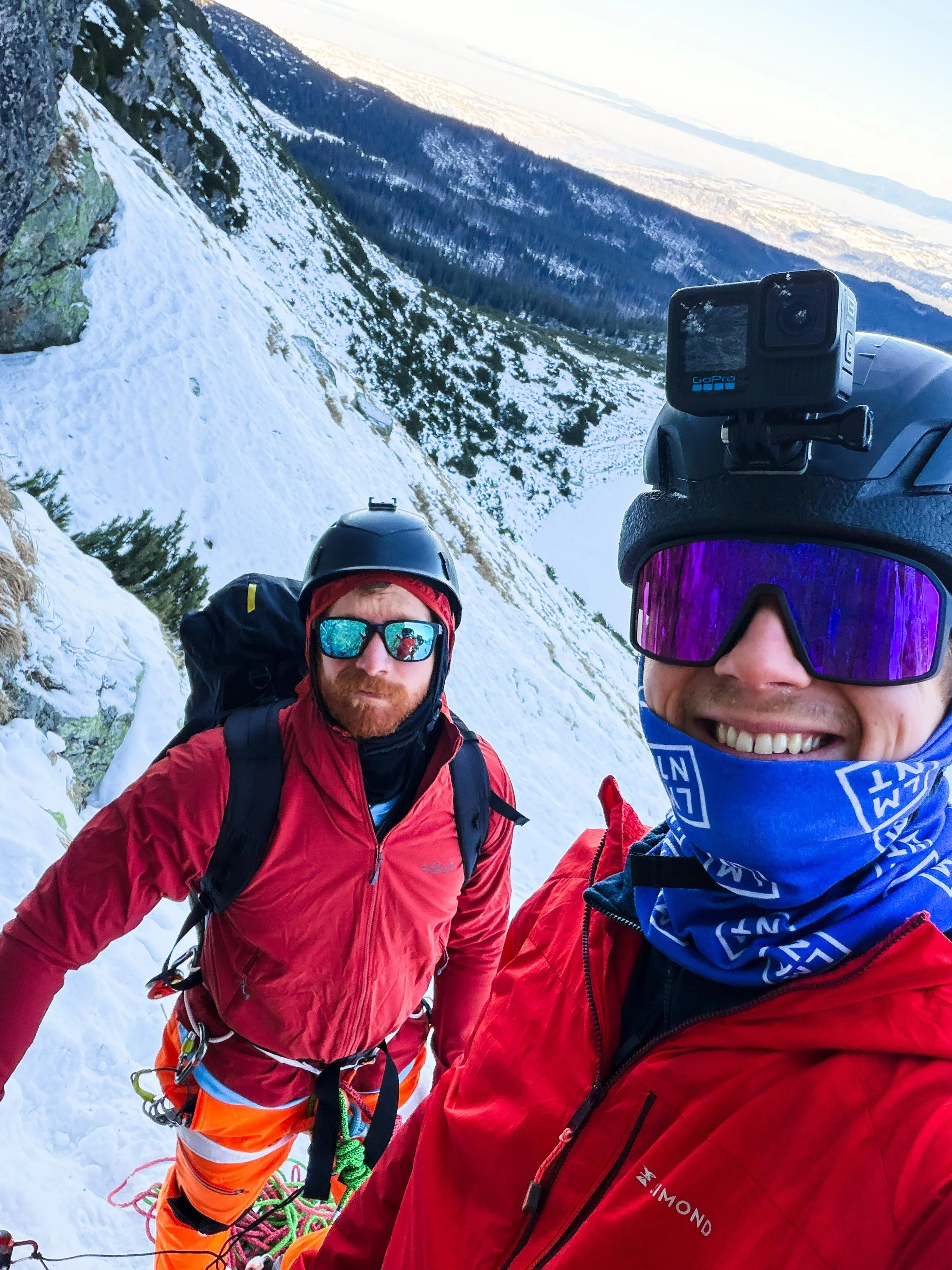
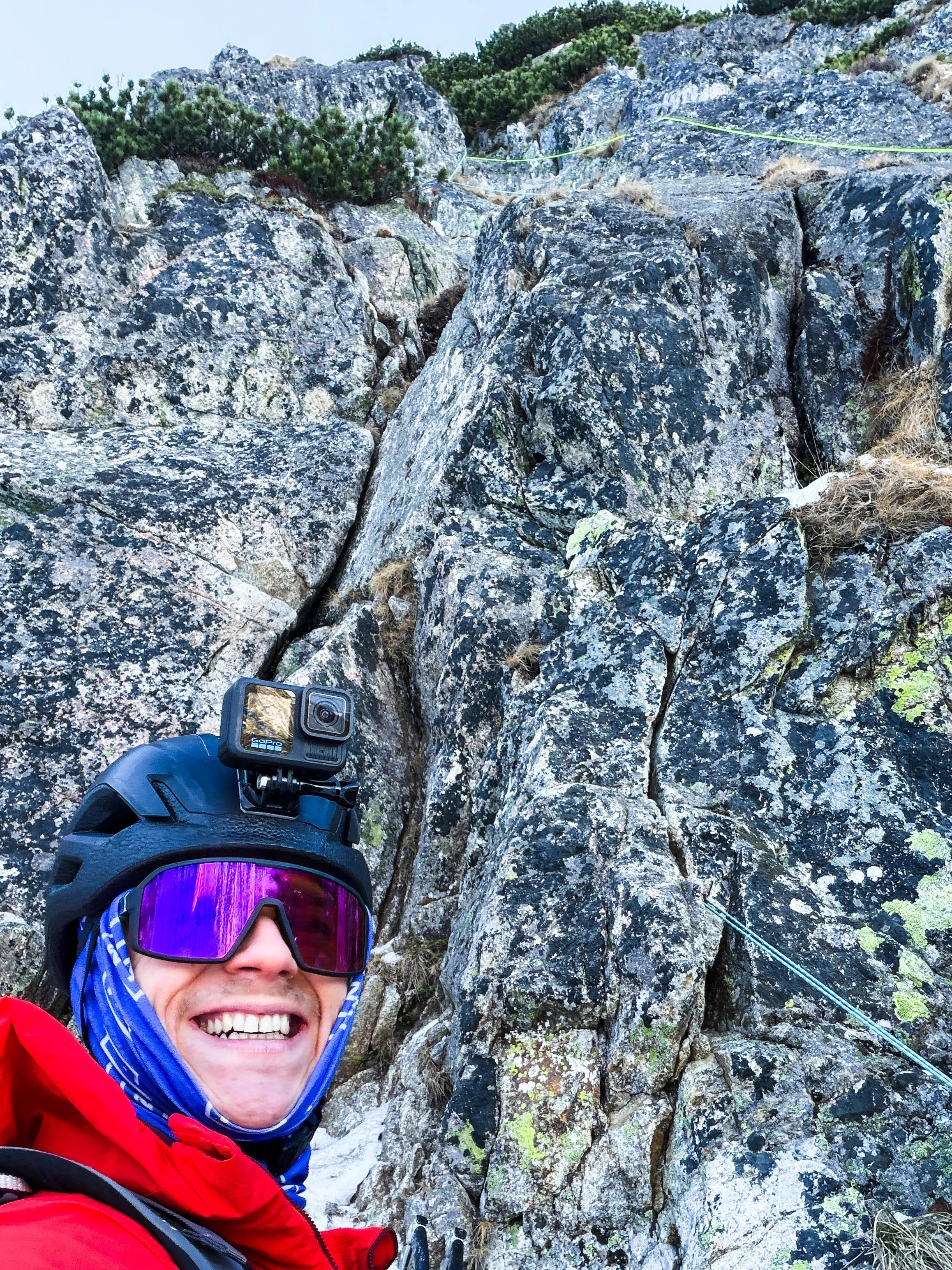
Above left: Gustaw and Wojtek tackling their second pitch. Above Right: Belay selfie for posterity.
Pitch 1 is a M3 warm up of frozen turf and unconsolidated snow. As we get to pitch 2, we have to decide the rest of our route. Czuba Nad Karbem is a veritable playground, with dozens of variations and combinations to make. I eventually decided to take a variation to the right, up a steeper crack system that isn’t in the guidebook but is something like M5 or M6. It protected nicely and I was proud to have pushed myself.
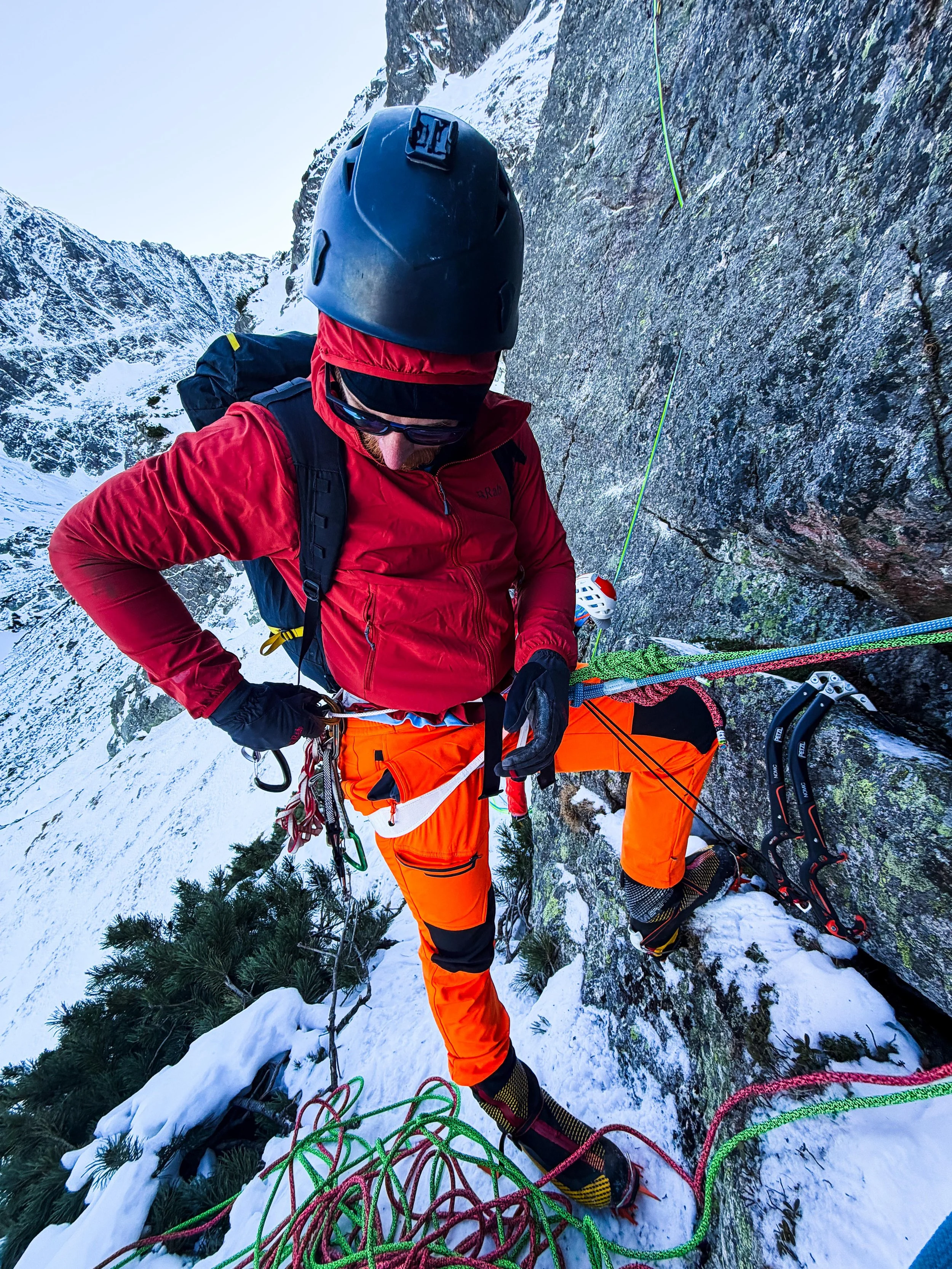
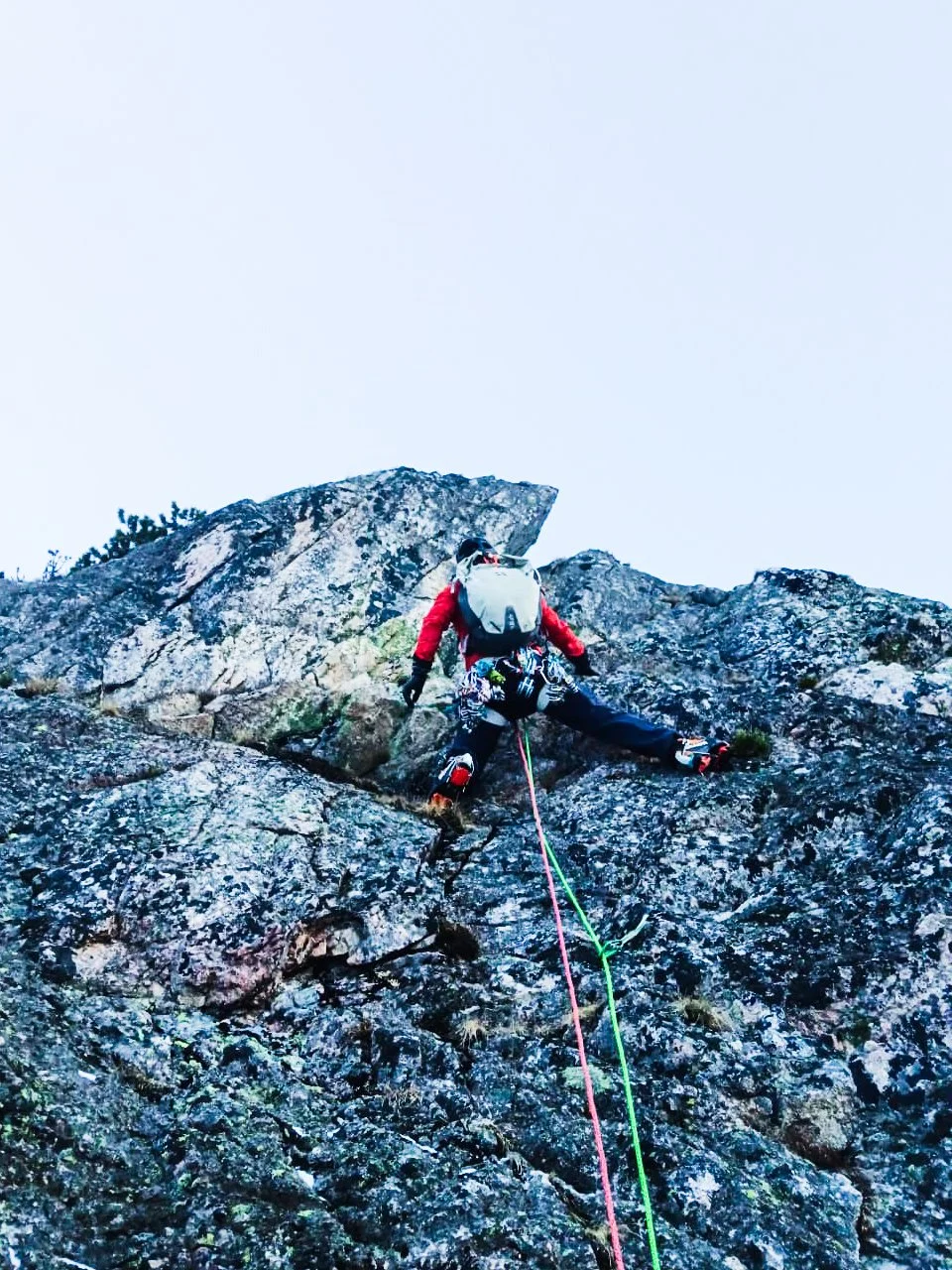
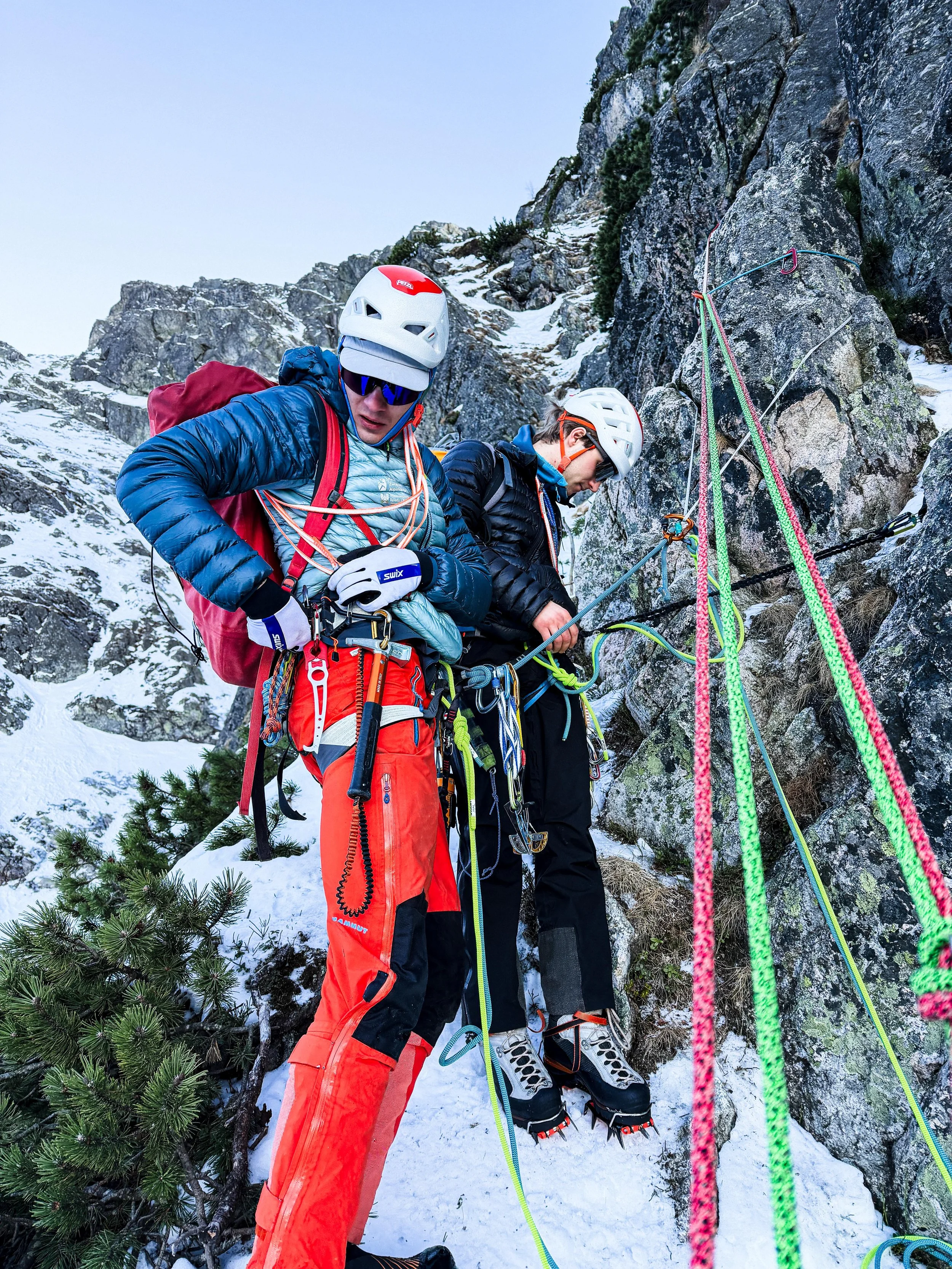
Above: Left: Richard Gearing up to Belay. Right, me up the crack system on pitch 2. Bottom Left: deciding where to go. Bottom Right: Snow slope above pitch 2 with the famous dwarf pines.
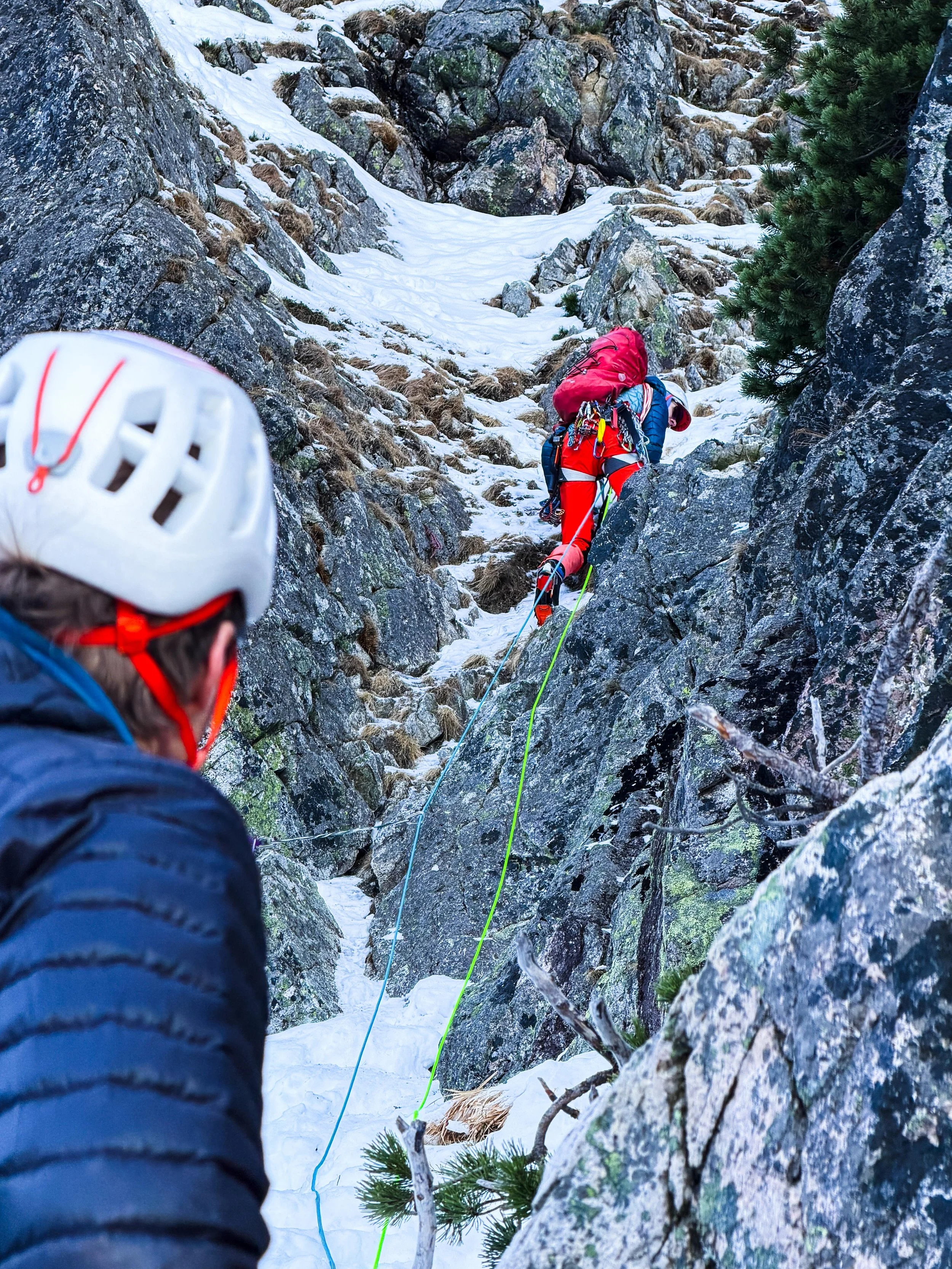
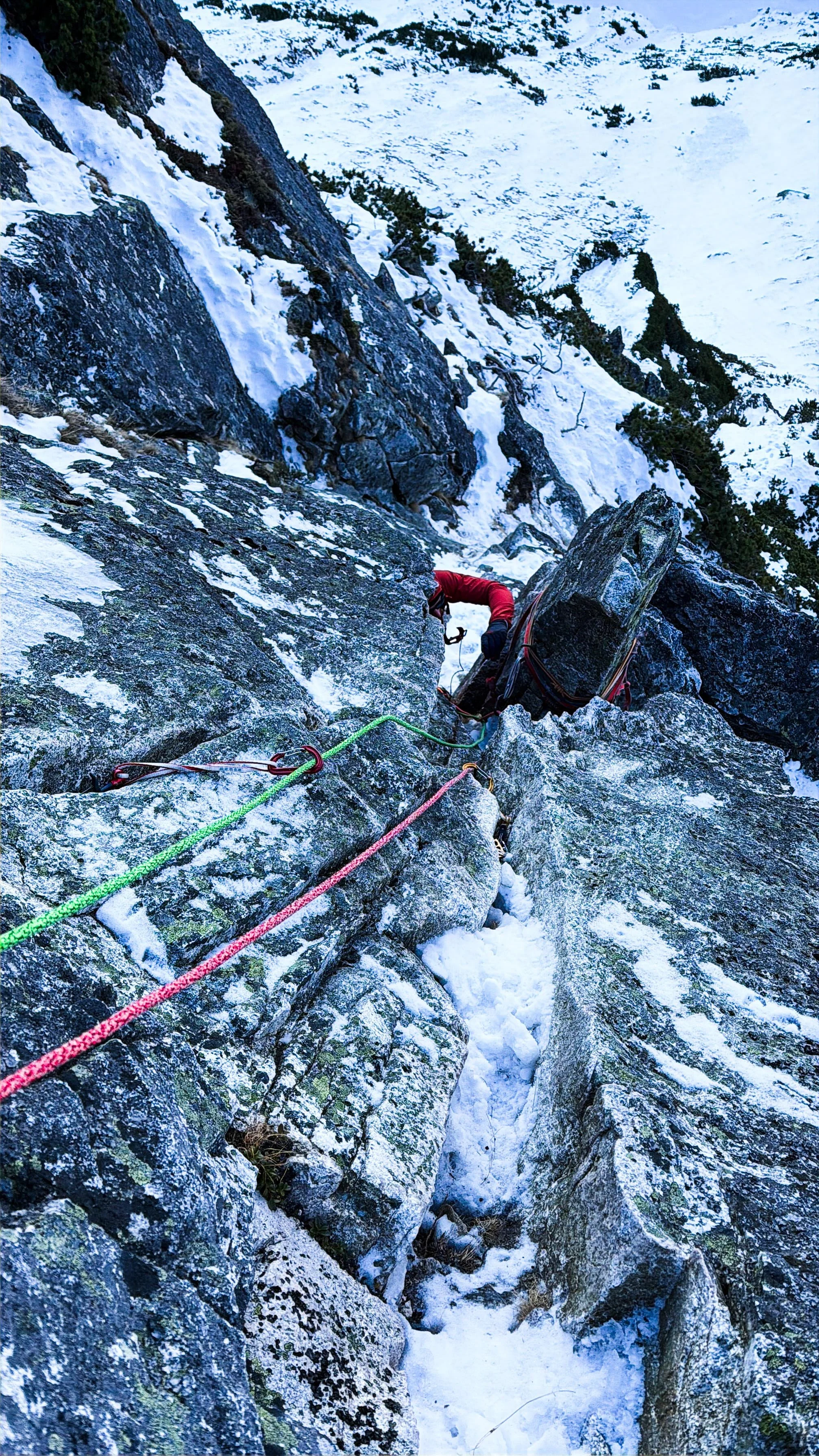
Above: Wojtek and Gustaw heading up a later pitch. Bottom left: I’m excited to venture up this crack. It was easy to protect down low but scary up high. Bottom Right: Richard squeezing through a tight dihedral on a later pitch with views to the frozen black lake, 200m below.
The next few pitches climbed well, much easier climbing but with sometimes sparse protection. Conditions were such that any time we were on rock, it was quite dry and there wasn’t much neve (frozen snow) to make use of.
As we approached the final pitch, the options were - climb the easy “0” snow couloir to the left, take an M3 or M4 variant to the top, or, try to reinvent the wheel. Invariably, I tried the latter. The m4 pitch looked quite climable but something about it made me think it wouldn’t be as nice to protect as a line 10 meters to the right. So up I went, proceeding to climb the hardest pitch of the day. It clearly hadn’t been climbed in a while, it was between two much more travelled pitches and had a completely overgrown rusty piton in the middle.
At the top, the only available protection were a bundle of dwarf pines. I girth hitched as many of the limbs as I could with a few slings, plunged my ice tools in to the snow for good measure and belayed Richard up. He later told me if I had looked a few inches lower I could have spotted some much thicker and more reassuring trunks to anchor to. We both agreed this must have been the hardest pitch of the day. The summit was now just a short scramble away.
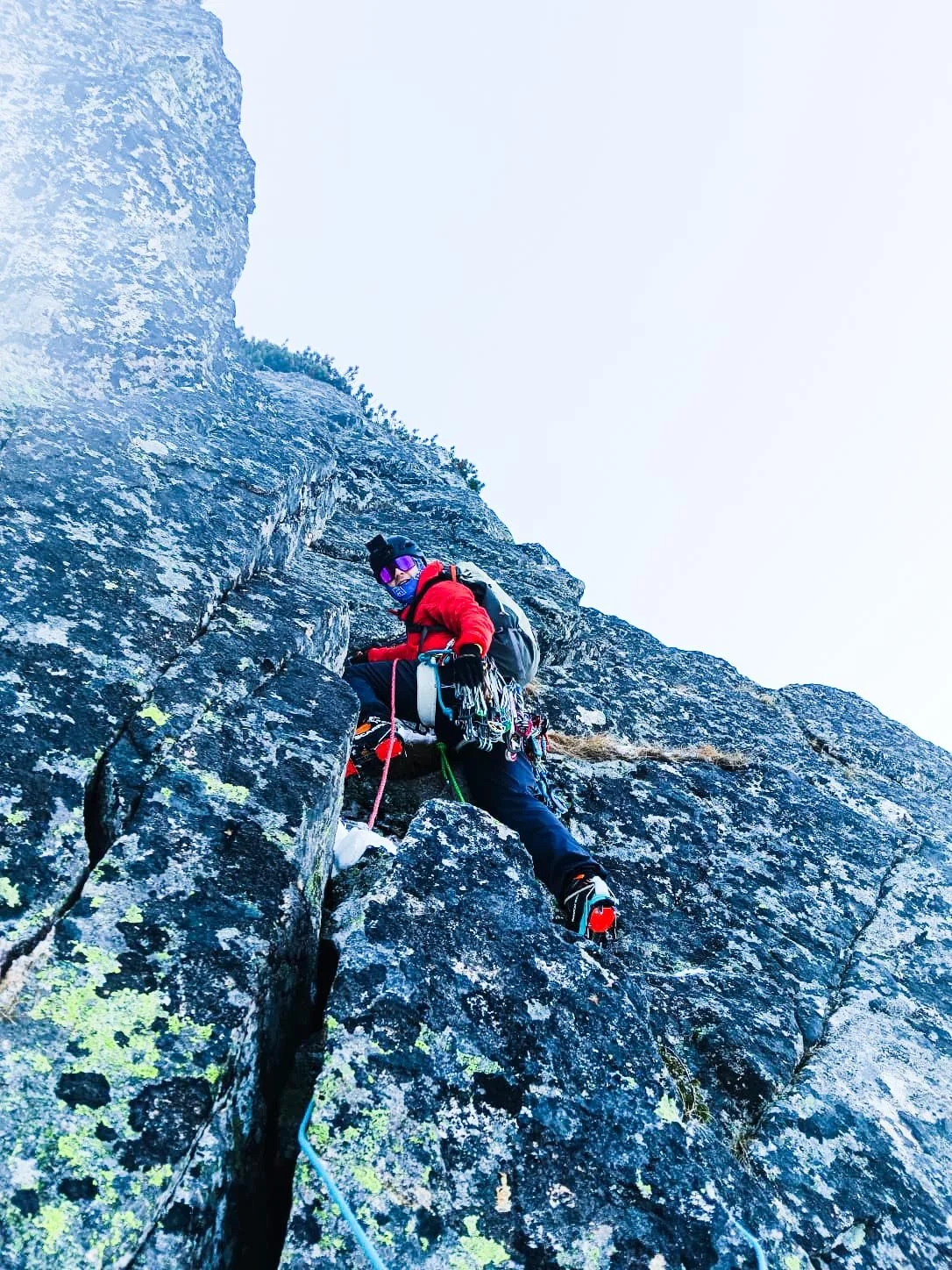
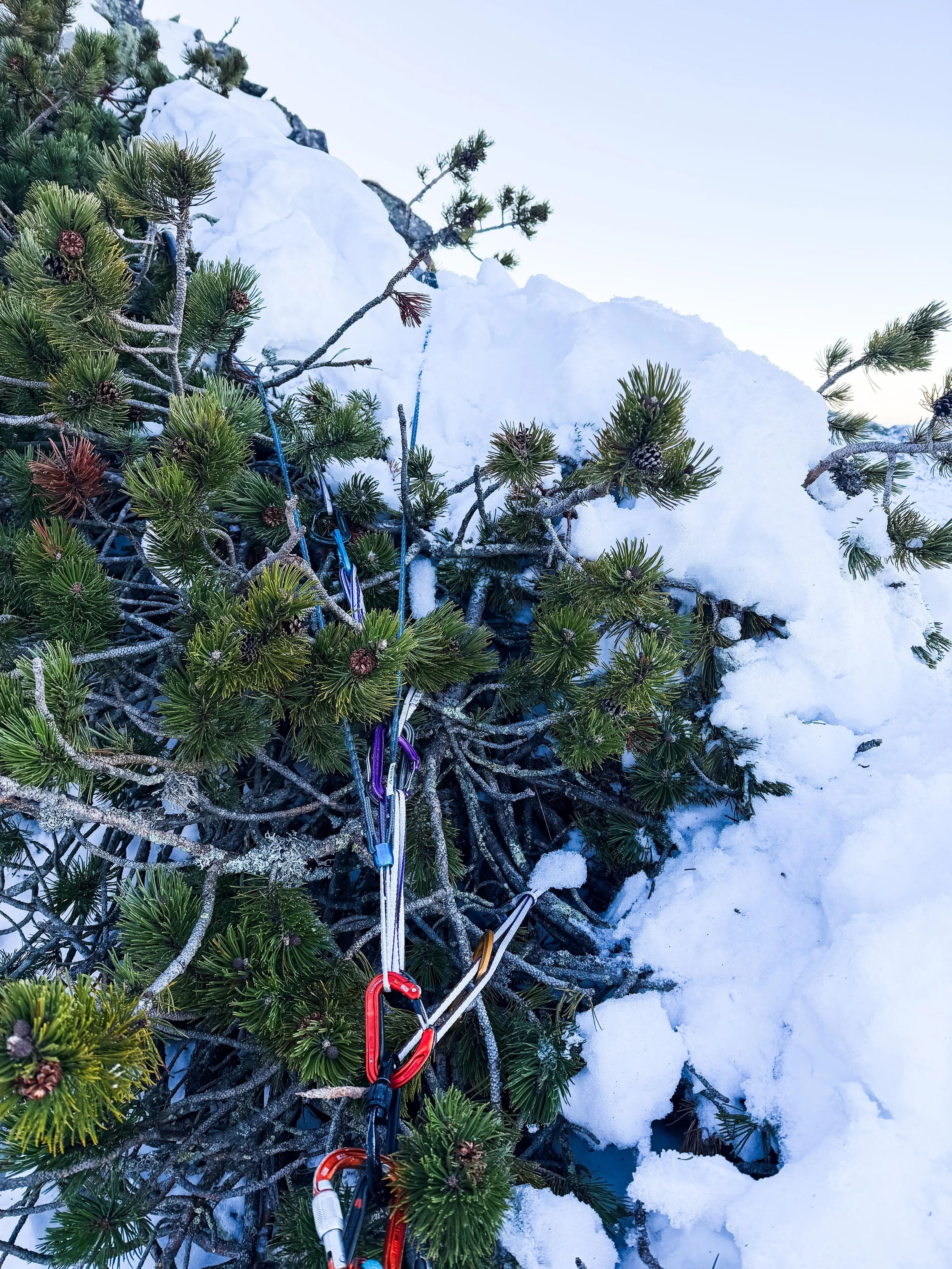
Above: setting off for the final pitch. The Dwarf Pine Anchor. Richard dry tooling up the crux section of the pitch.
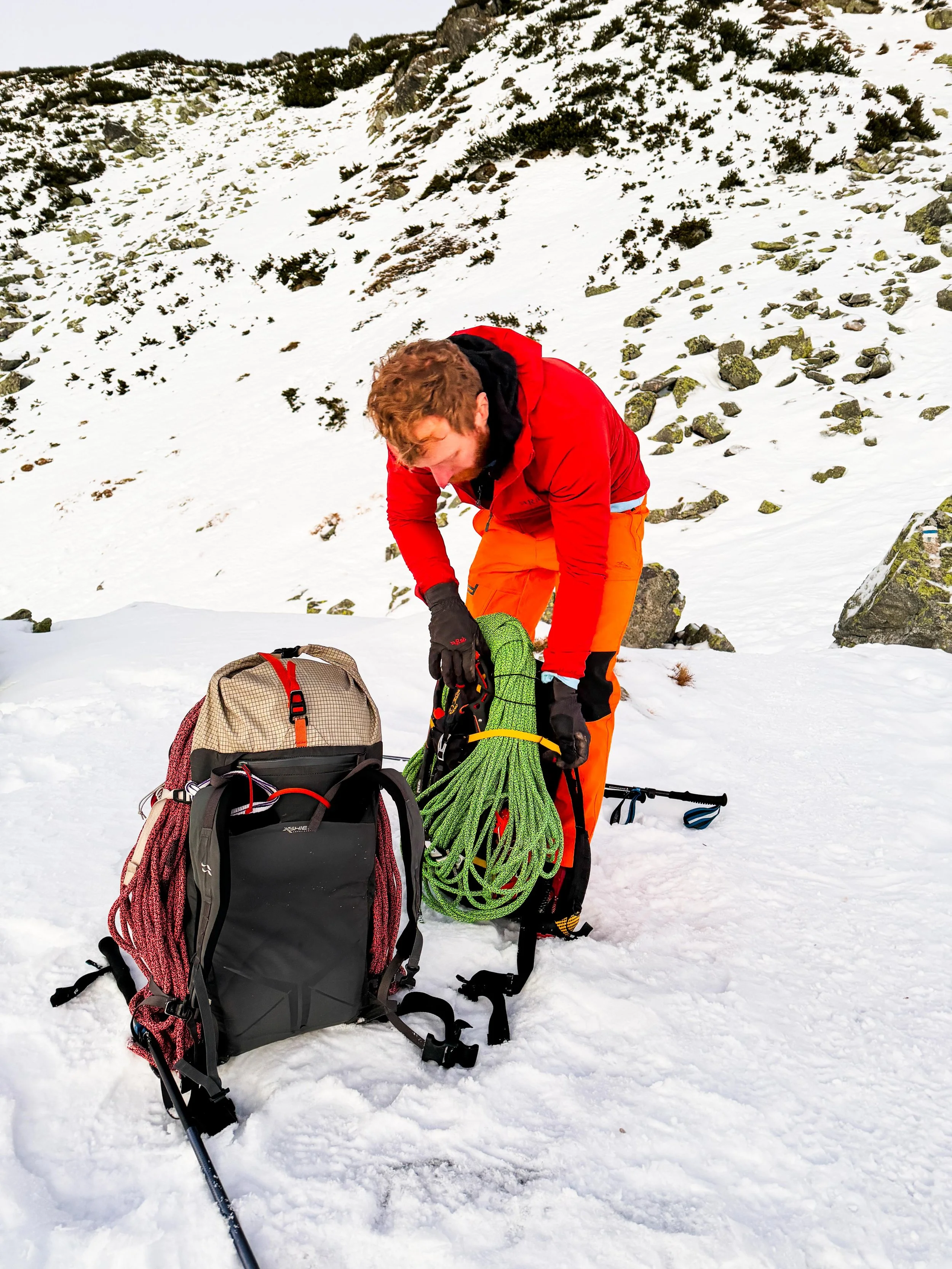
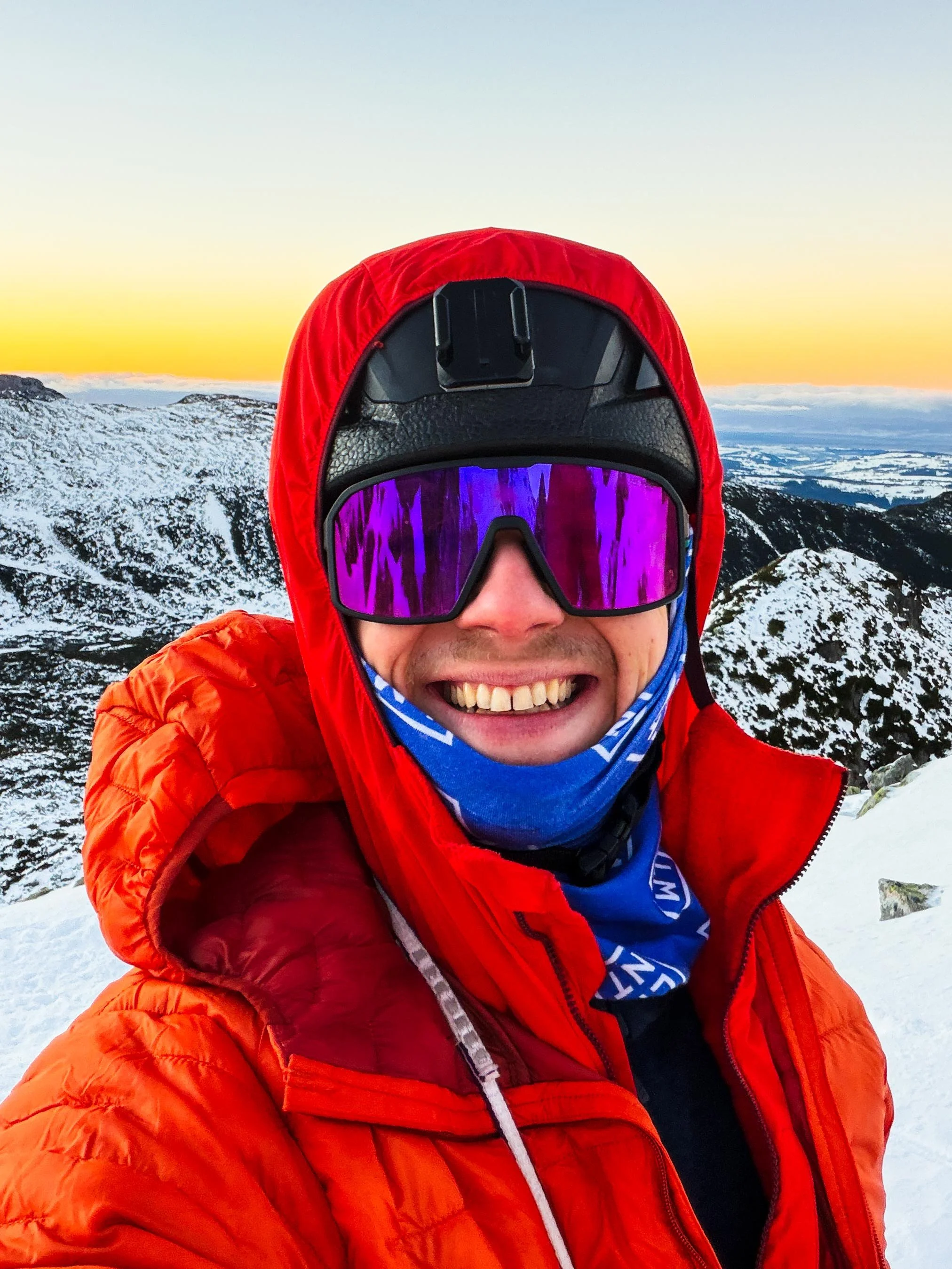
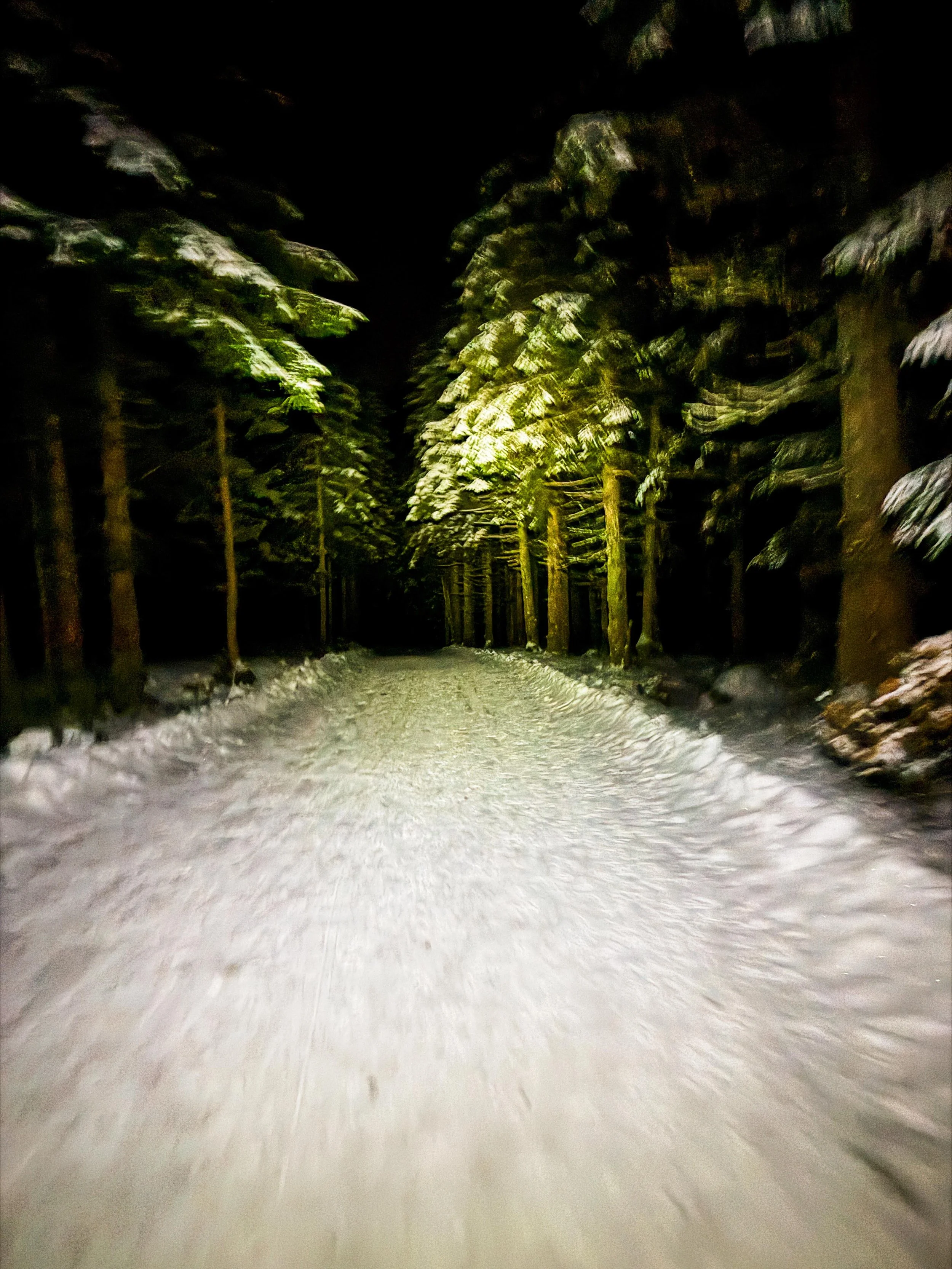
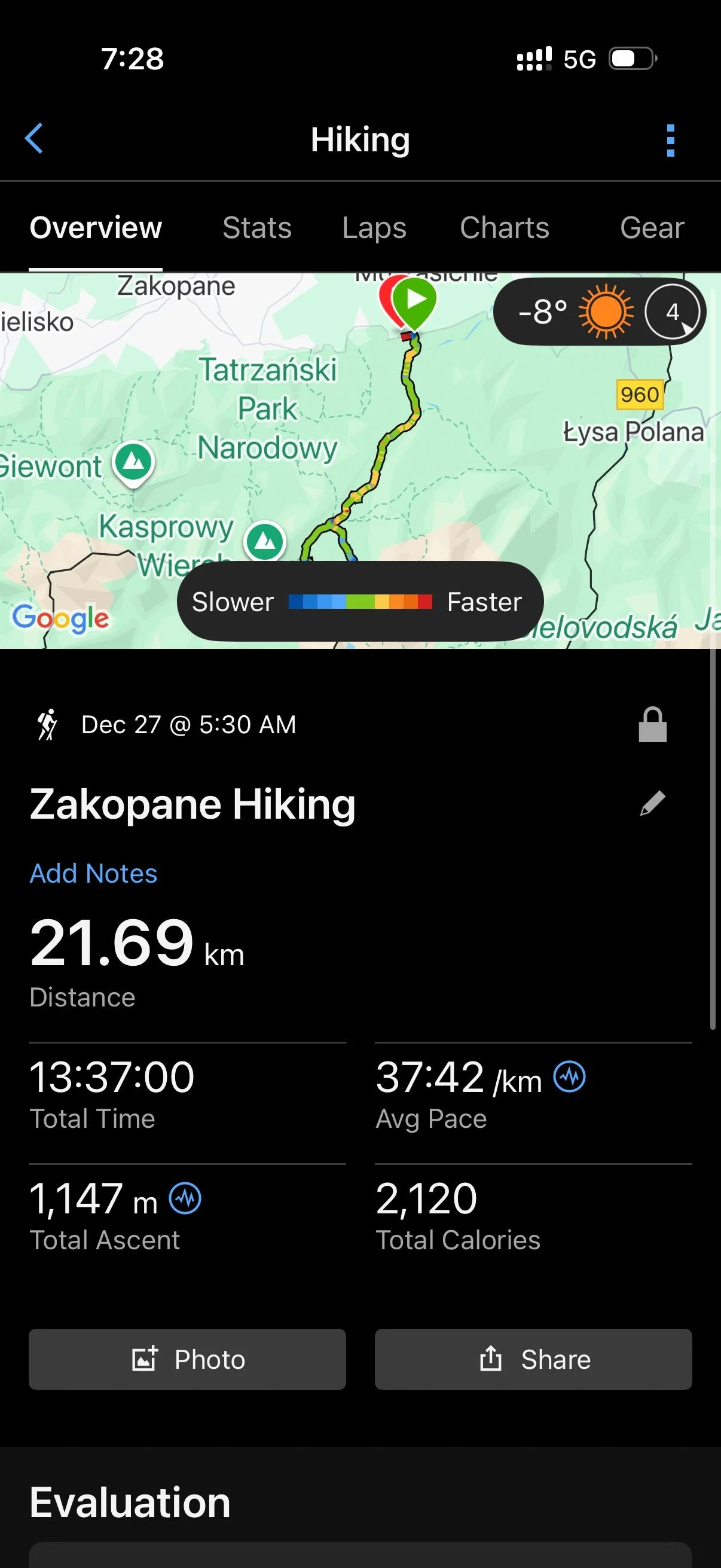
We summited, decended to the Karb saddle and off down the easy slope behind it into the Dolina Gasienecowy and followed the hiking trail to the other side of the Murowaniec hut before decending the same path we had walked up that morning. It was a brutal 14 hour day to warm up with. My feet were in bits at the end. The big lesson for me was I would much rather needlessly carry trail running shows on my back all day than wish I had them when I didn’t. It felt good to get out of the boots and go devour some food in town.
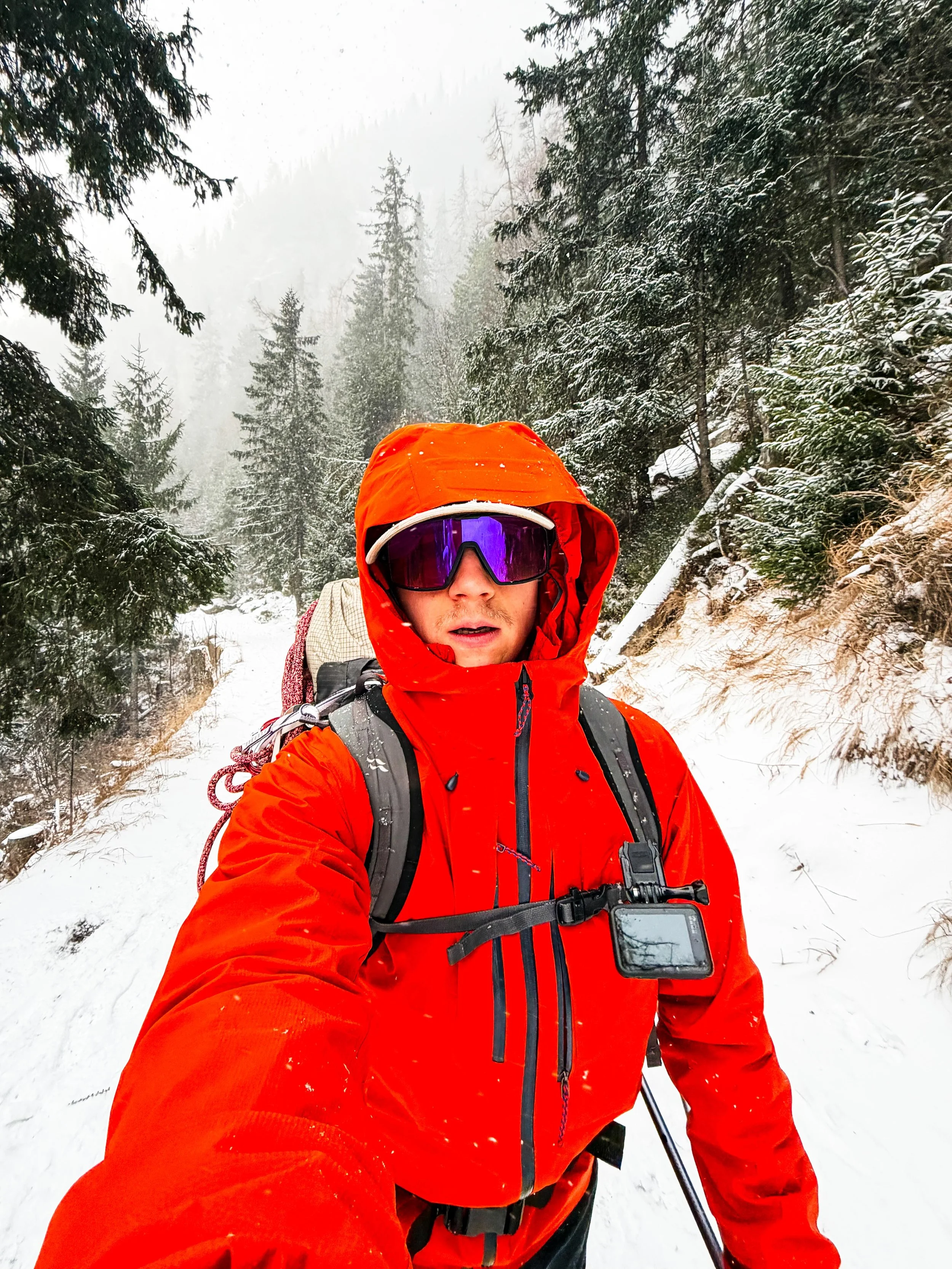
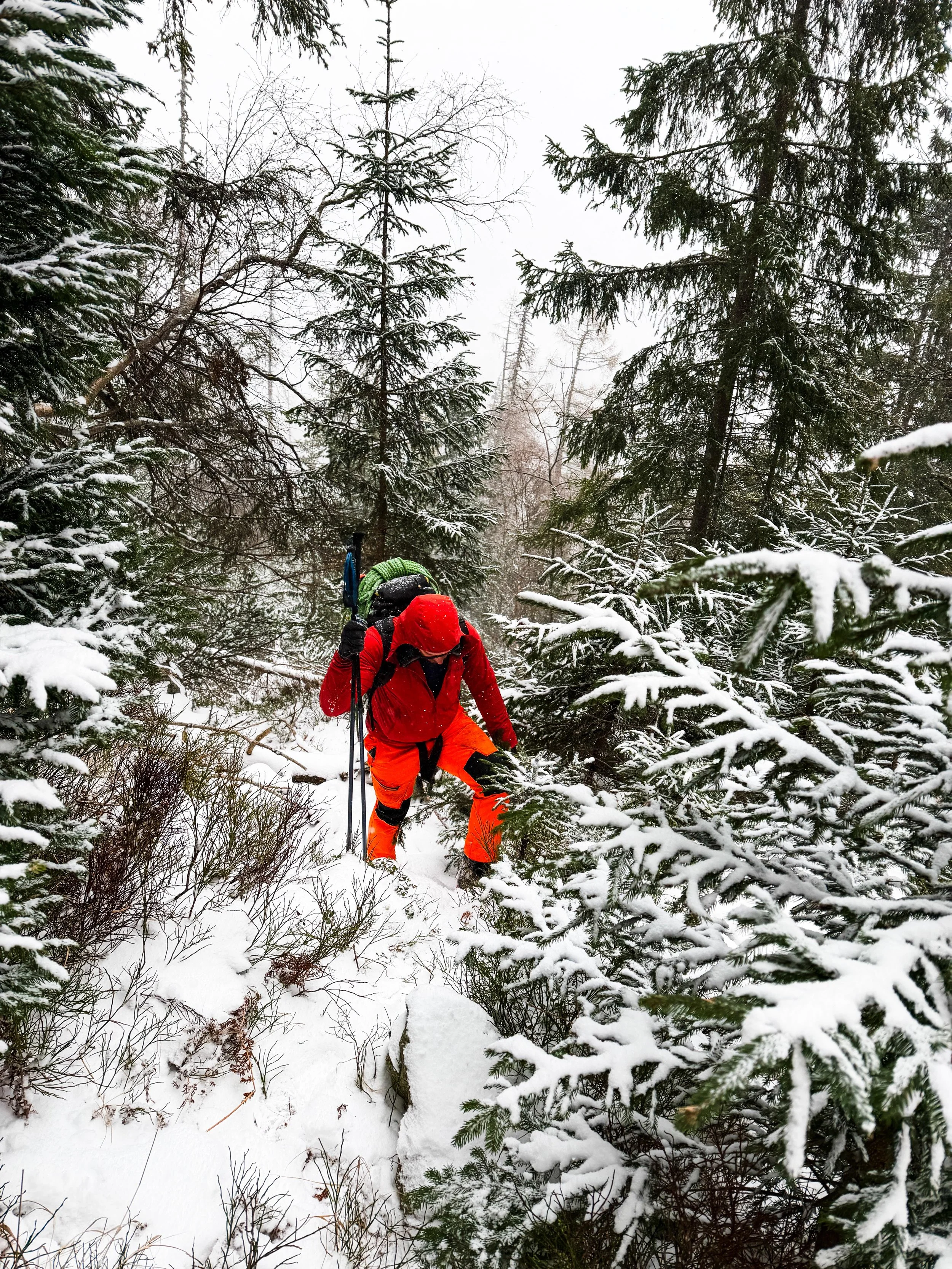
Day 2: In Search of Slovakian Ice
After the beating I had just given my feet, day 2 needed to be a little lighter duty. We drove 1 hour accross the border at Lysa Polana towards the opposite side of the mountain range in the Slovakian town of Vysoke Tatry (High Tatra). Here, a whopping €15 of parking paid via a QR code seals the deal and we’re off to the Hrebienok Furnicular cog train. This train saves 1000 feet of elevation gain on foot. I was happy to pay the €10 lift ticket.
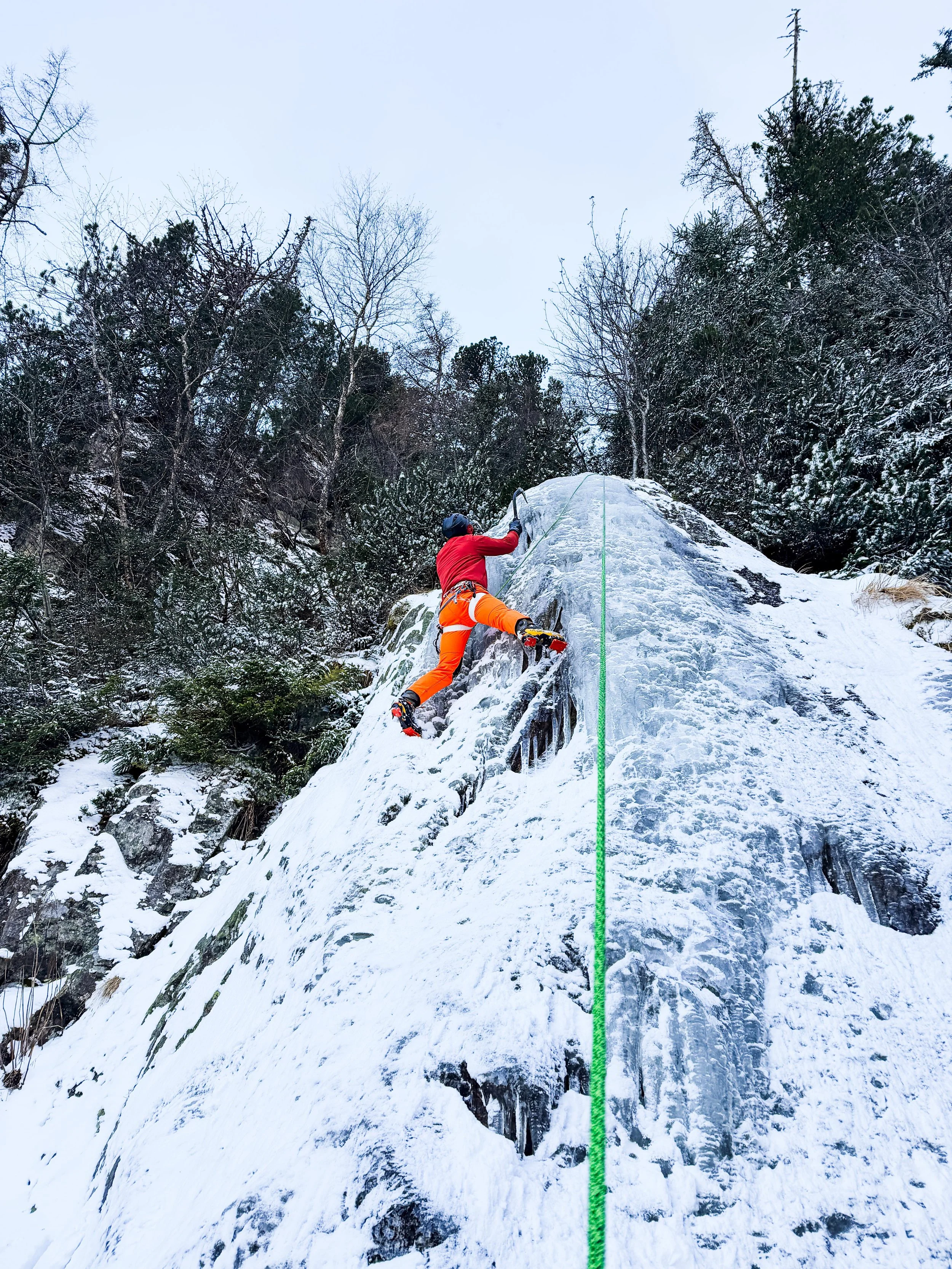
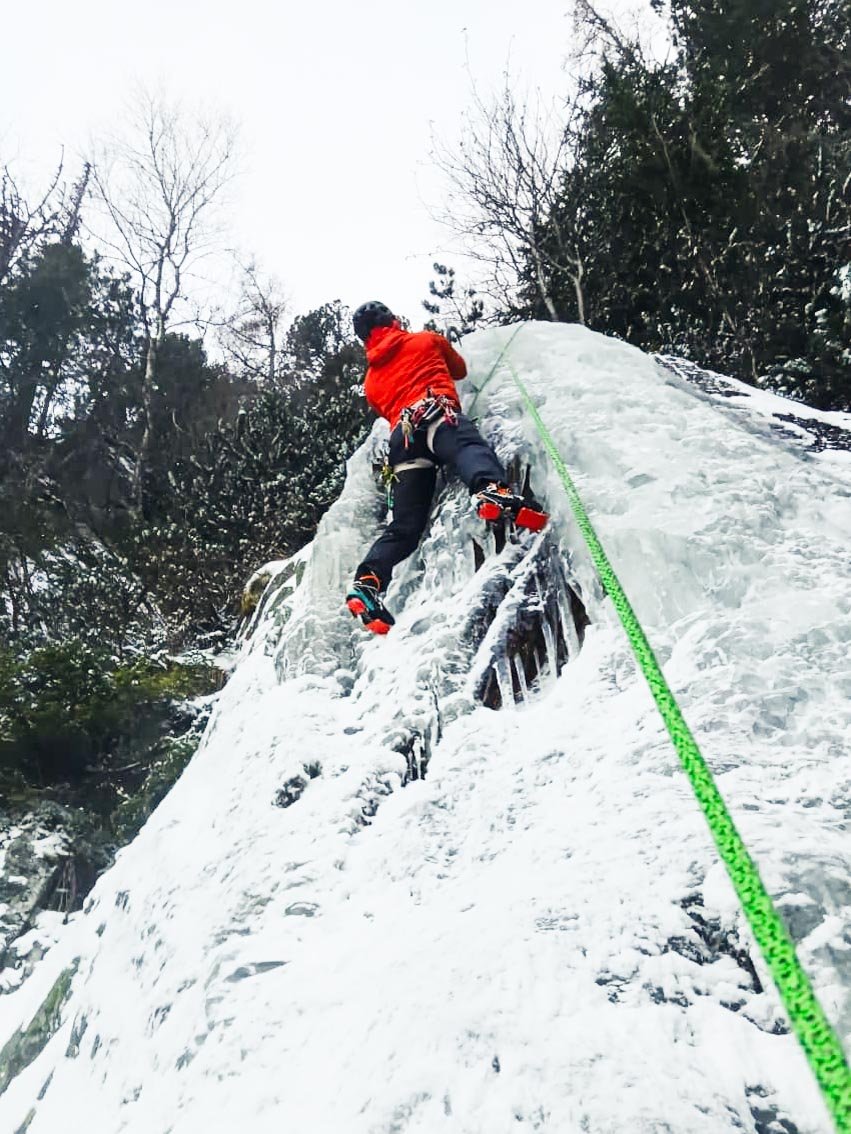
The train takes us to Hrebienok, at the mouth of the Starolesna Valley, home to many ice climbs. For me, ice climbing feels less secure than mixed climbing. The oft repeated mantra for ice climbers is to never fall when leading. I am sure falling while mixed climbing is equally hazardous, given the blades strapped to our feet and held in our hands. But I am trying to be especially cautious as I begin leading on Ice. Rock is rock. Ice is a medium that changes from day to day and hour by hour. Whether it will hold an ice pick or reliably take a screw that will actually protect you is ever changing and it takes experience to know the sights and sounds of good ice that you can trust.
So in an effort to be conservative, I wanted to seek our some easy ice. The mission was to go to the climb: “Zahradky Right”. After bushwacking up the mountainside we found that the ice was incredibly thin. I didn’t think it was thick enough to accept an ice screw, so I set off to scramble around the side to set up a top rope above it for Richard and me. It turned into a delightful and hillarious drama, as we ascended far too high and far too far left. We had to make a big diagonal rapell from a tree to find the top of the ice and set up the toprope anchor. This only gave us a few hours of each running laps on the thin ice, practicing the movement. It was a great day and helped serve as recovery from the previous.
Day 3: Learning to Bail
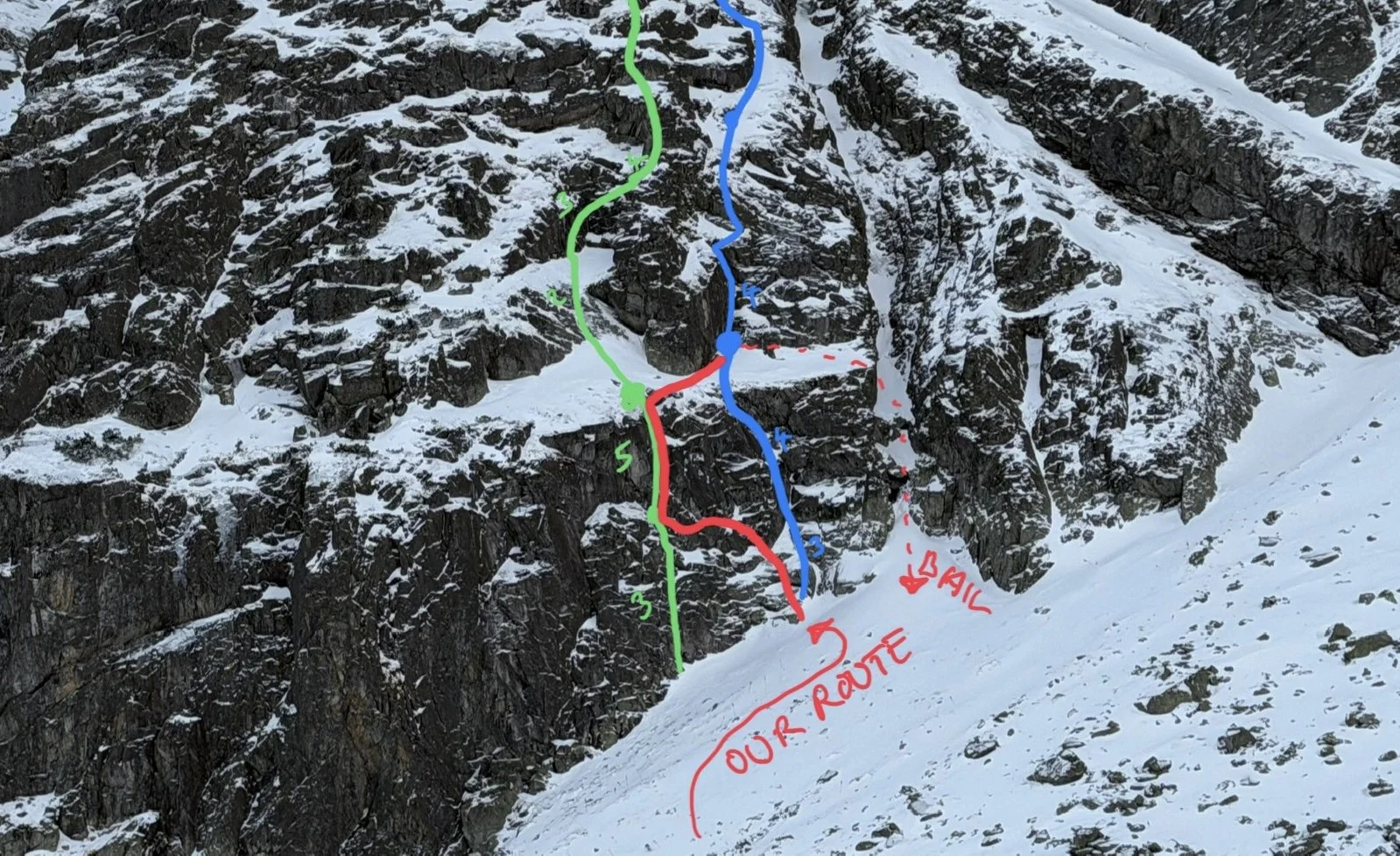
With sneakers on our feet this time, we set off from the trailhead to Murowaniec and Hala Gasienecowy a second time at 5am. With the big boots stowed in our packs we made incredible time up to the frozen Czarny Staw lake. The mission, to climb on the Prog Koscielec, a band of rock beneath the eastern walls of the Koscielec peak, a few hundred meters to the left of where we climbed on day one.
I was looking for a route graded “4” called “Hallawood”. We booted up on the lake and ascended the snow slope to the bottom of the face geared up to climb. From below, the route I had in mind didn’t look to be in great condition. The cracks were covered in snow and it didn’t look like it would protect well at all. To feel safe climbing, I want clean cracks that will accept our climbing cams and nuts. If they are hidden with snow or covered in verglas, it is not good.
To the left, I saw what looked like clean cracks in a more vertical section of the wall where the snow hadn’t accumulated. It was a route called “Powiedz Ze Sie Boisz” and a pitch graded “5”. It looked like there was a simple and easy ledge system that protected well up to it. Away I went. With every delicate ledge, I found unconsolidated snow, thin useless ice and never enough protection. With every ledge it seemed like the next ledge was the ledge with better protection options. It never was. Up I went, comitting further and further untill I could finally find a nice crack to make an anchor and bring Richard up to make our first pitch.
Before leaving the workshop, I had hoped to make a batch of Pitons and Hooks for myself. They are reccomended gear for the Tatra winter climber, but I hadn’t had enough time. This route would have eaten up pitons and would have made it much more pleasant and safe. Next time…
I had spent so long on the first pitch, inching my way up that we were far behind our planned schedule. I considered bailing to find an easier route, but with a boost of enthusiasm from Richard, up we went again. I made a short pitch and found the attractive looking dihedral graded “5” we had seen from the ground. It looked hard to get into, but it looked like it would have plenty of good spots for cams higher up. Up I went. This was serious climbing. A gorgeous crack up the left side of the dihedral, smooth rock on the right side. All the moves came out. Liebacks, stems, stein pulls, hand jams. All the techniques came into play to scratch my way up it. When I finally struck firm turf at the top of the rock and hauled my way over the onto the snow slope above, I was very proud to have undertaken the challenge. It was much harder than the climbing on Czuba Nad Karbem and tested my strength and my head.
Once Richard joined me at the belay, we dug furiously for bolts, expecting them from what we had understood from the topo. Without finding them and not wanting to risk having to leave multiple bail anchors by continuing on, we decided to call it for the day and head back down, leaving two cams and a nut as a bail anchor, that Wojtek and Gustaw would very kindly retrieve for us a week later.
The lesson for me, don’t trust the cracks are better up close, and make some bloody pitons!
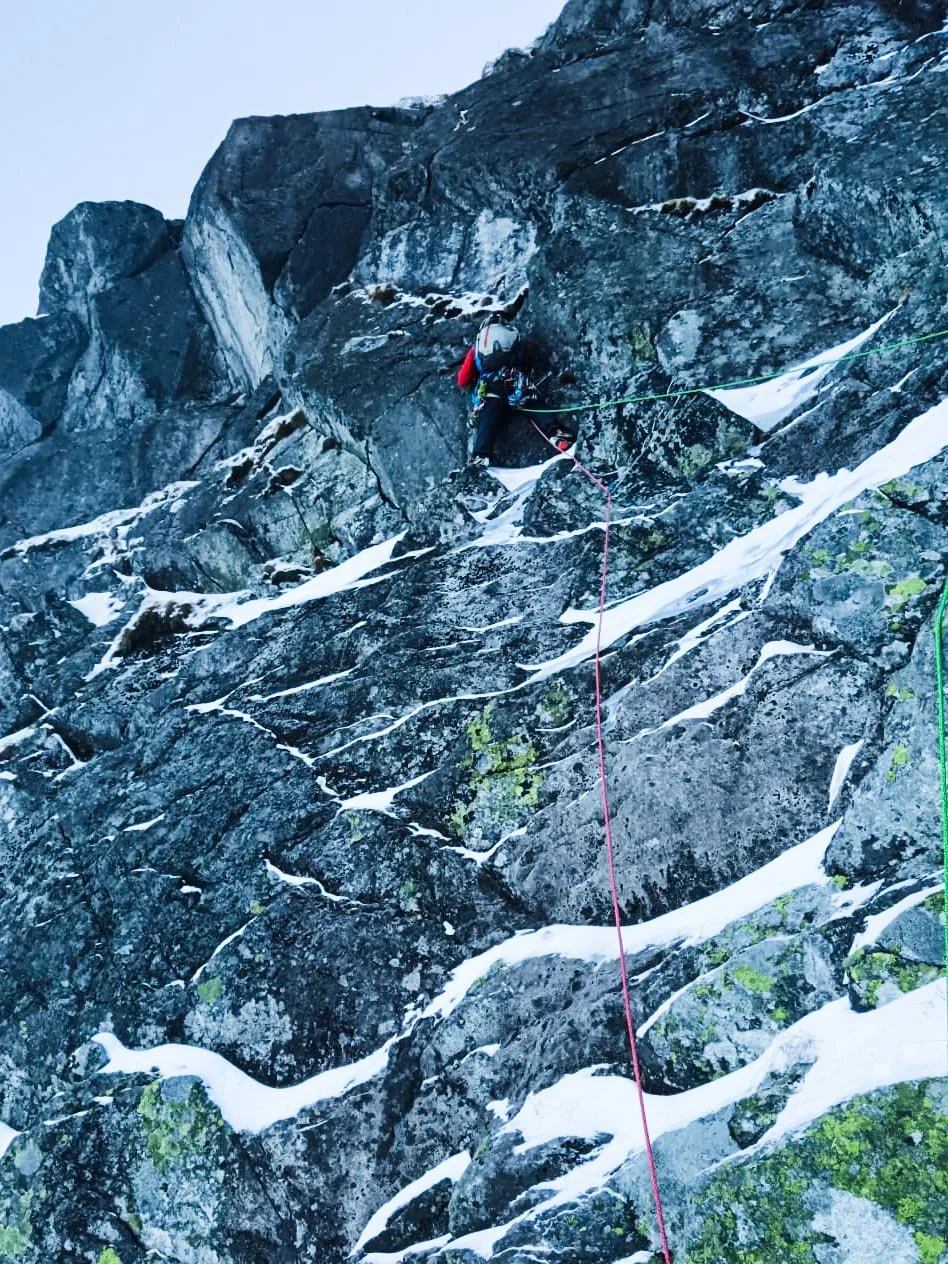
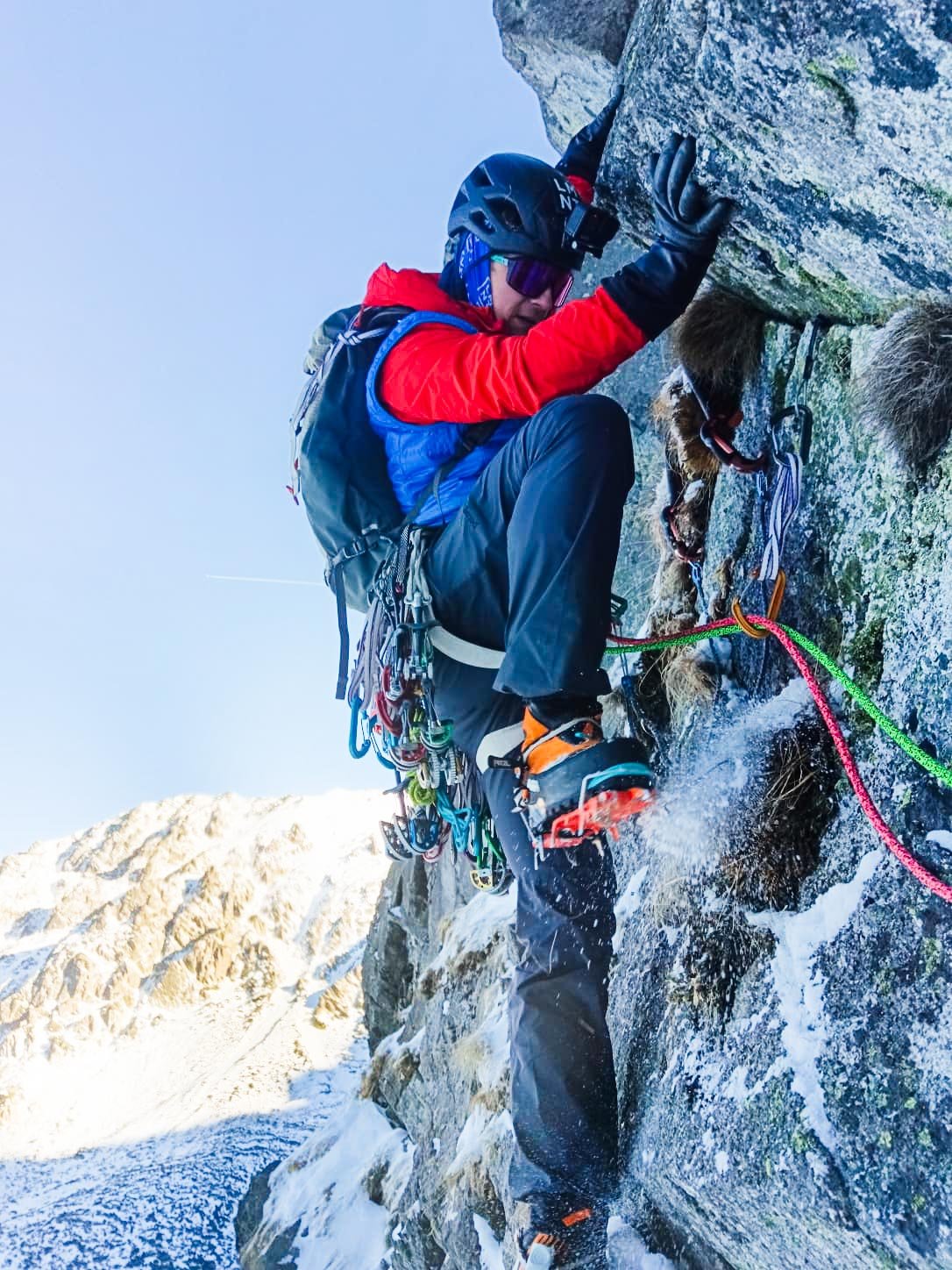
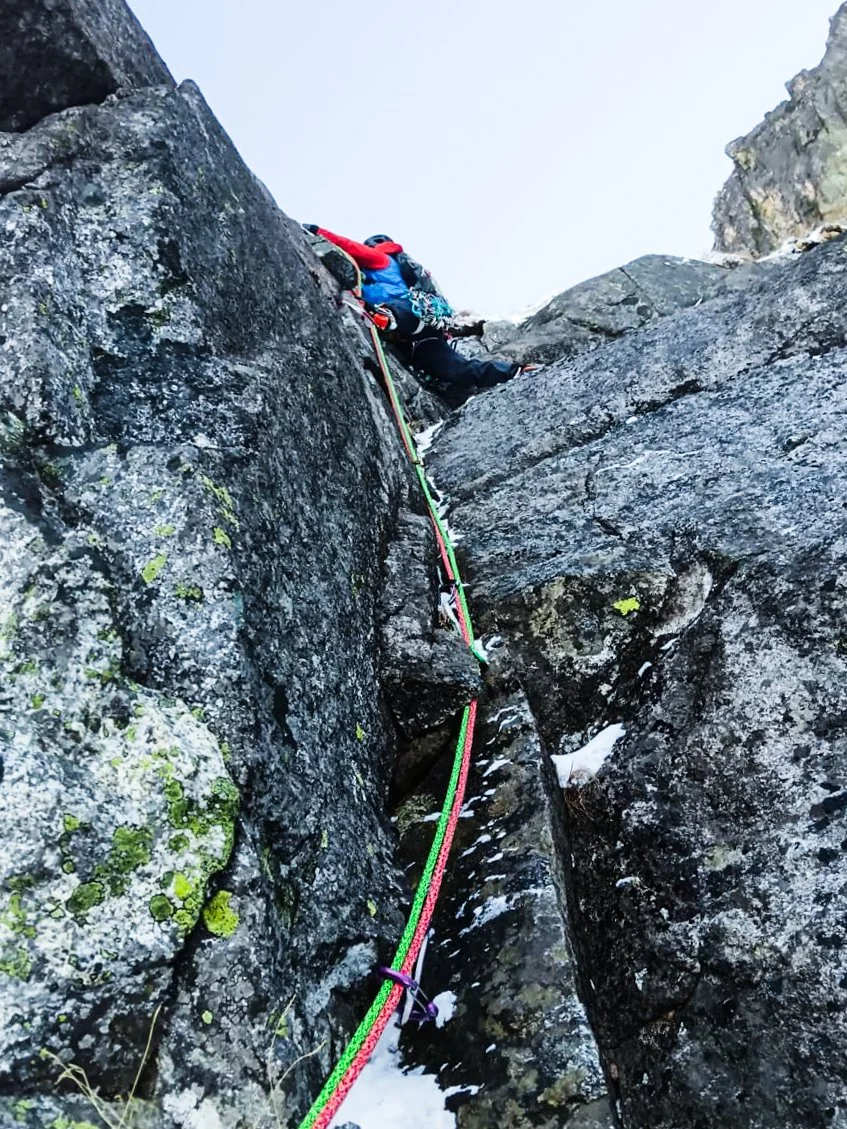
The incredible pitch of “5” (felt a lot harder than M5!!)
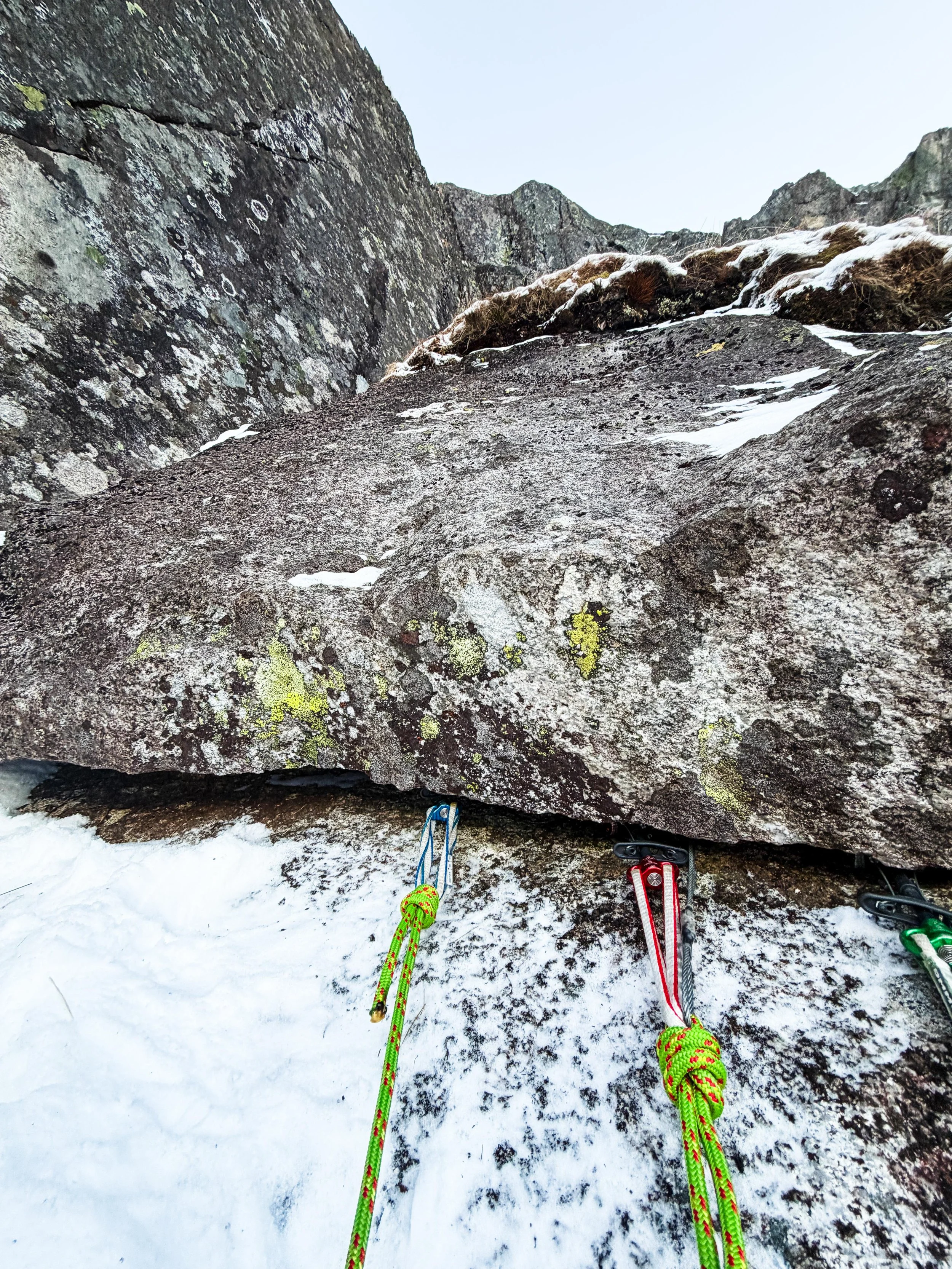
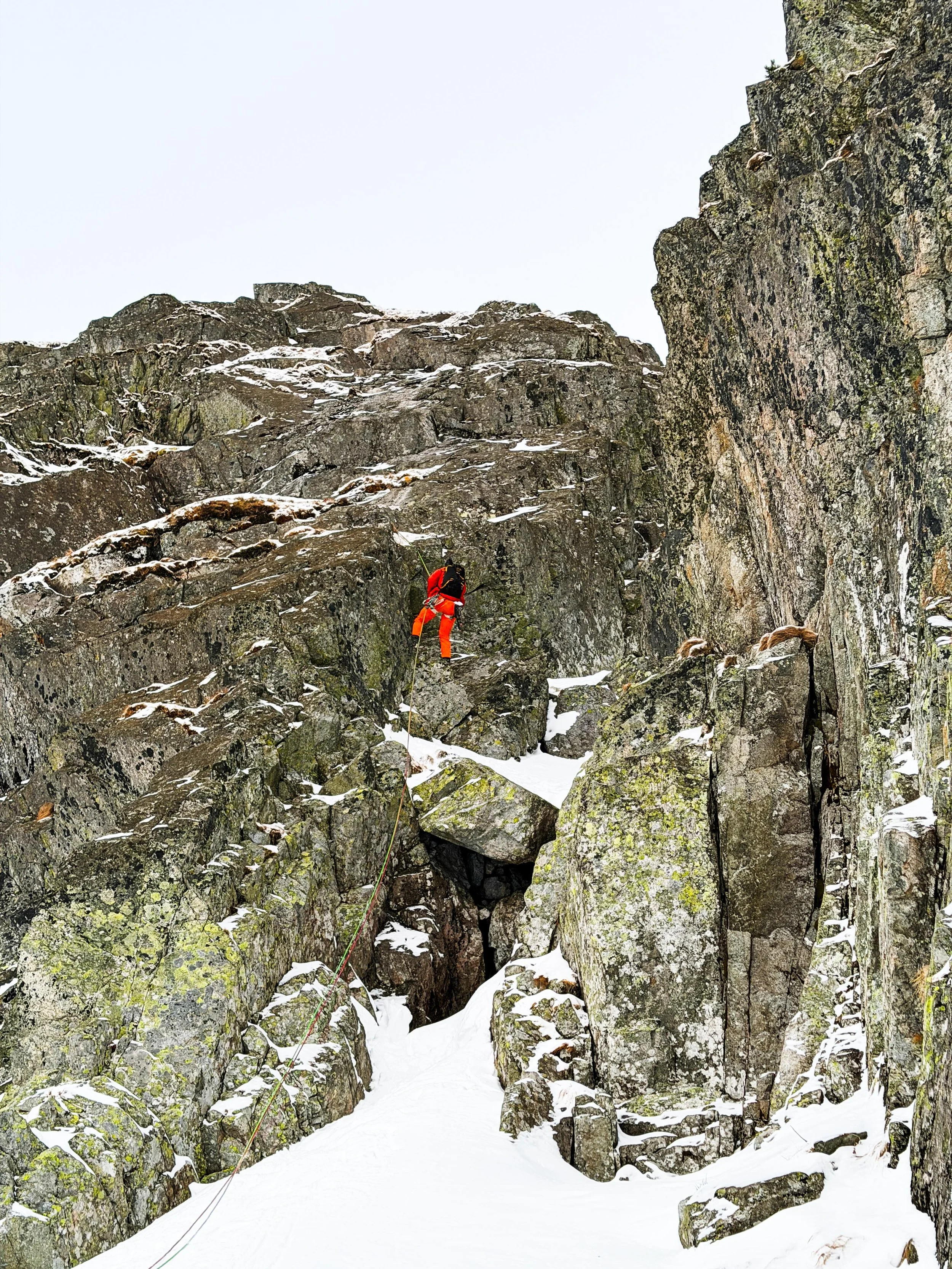
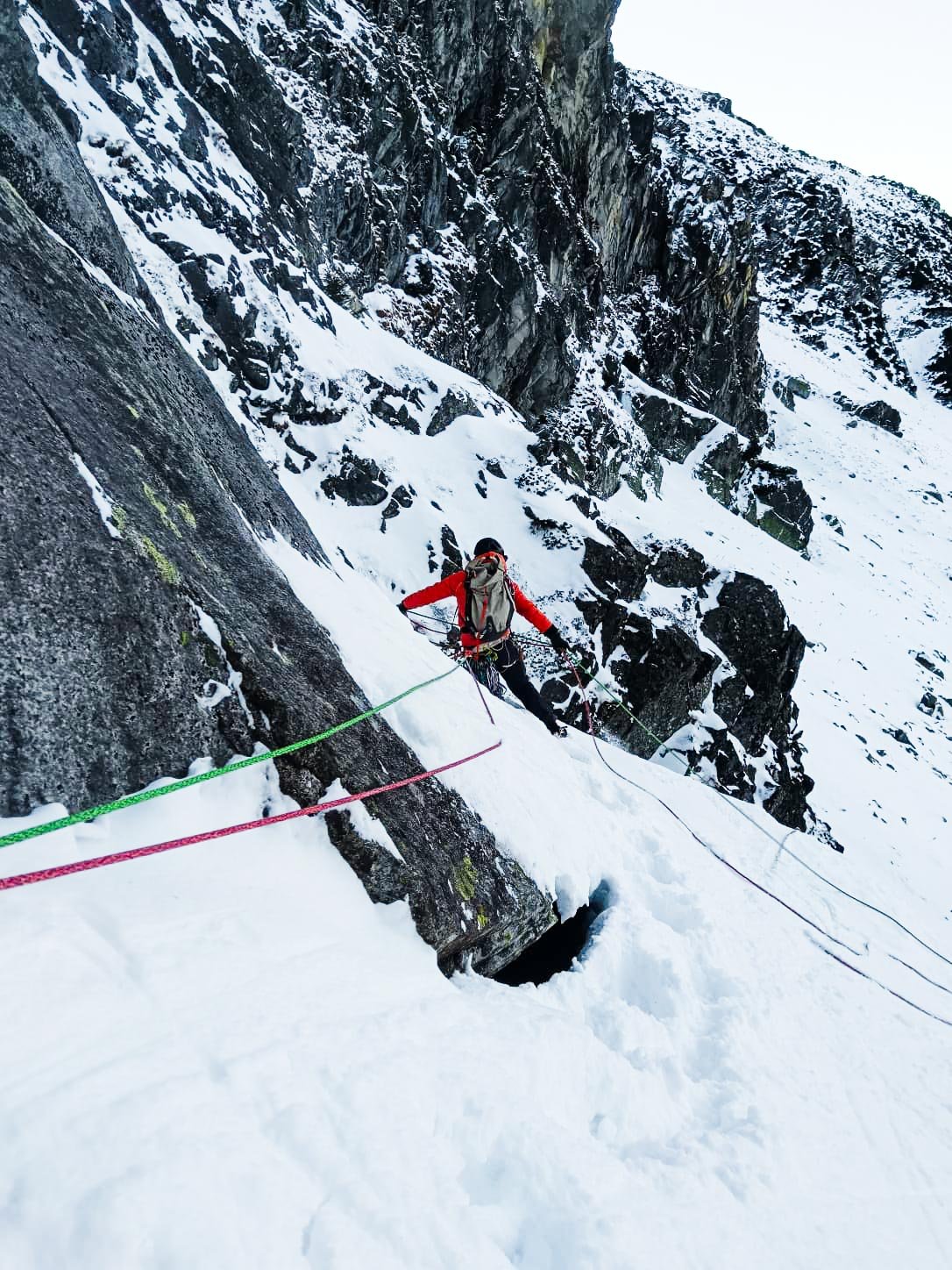
Above: The Bail Anchor and subsequent retreat. Leaving $200 worth of gear is cheap compared to the alternative.
We made it safely down to the car, found a good restaurant and ate away any residual stress. When you go to Poland, I highly reccomend potato pancakes with beef goulash or kielbasa with onions. I was particularly hungry, so I got a portion of both.
Day 4: In Search of Polish Ice
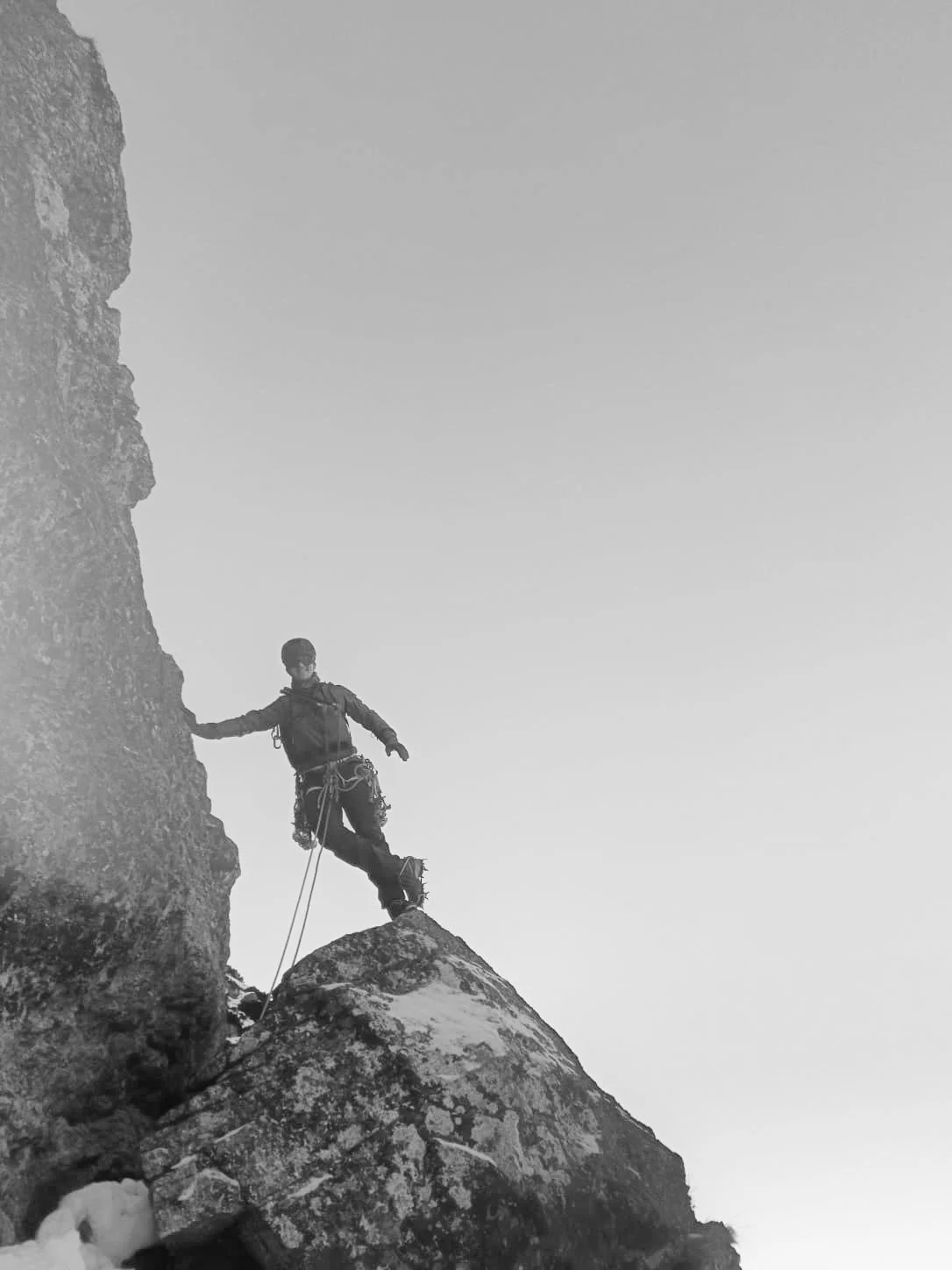
It turns out my optimism is stronger than my trust in the weather forecast. I seemed to think that despite the reports of extreme wind and low visibility, it might be calm and clear enough to venture for a walk up to a relatively easily accesible peak…
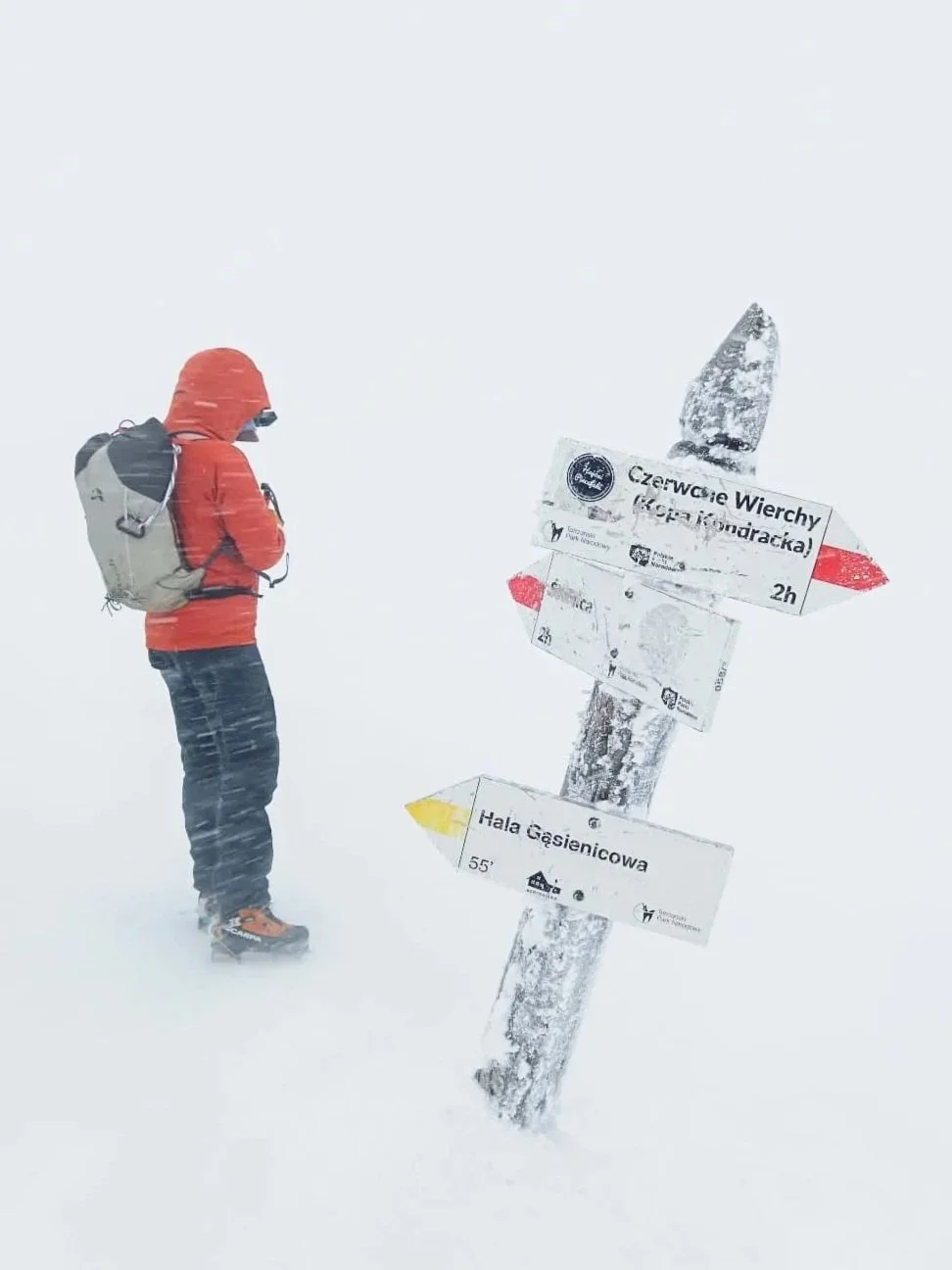
It was not clear or calm enough…
So we went down and drove to the Biala Woda Valley in search of some ice!
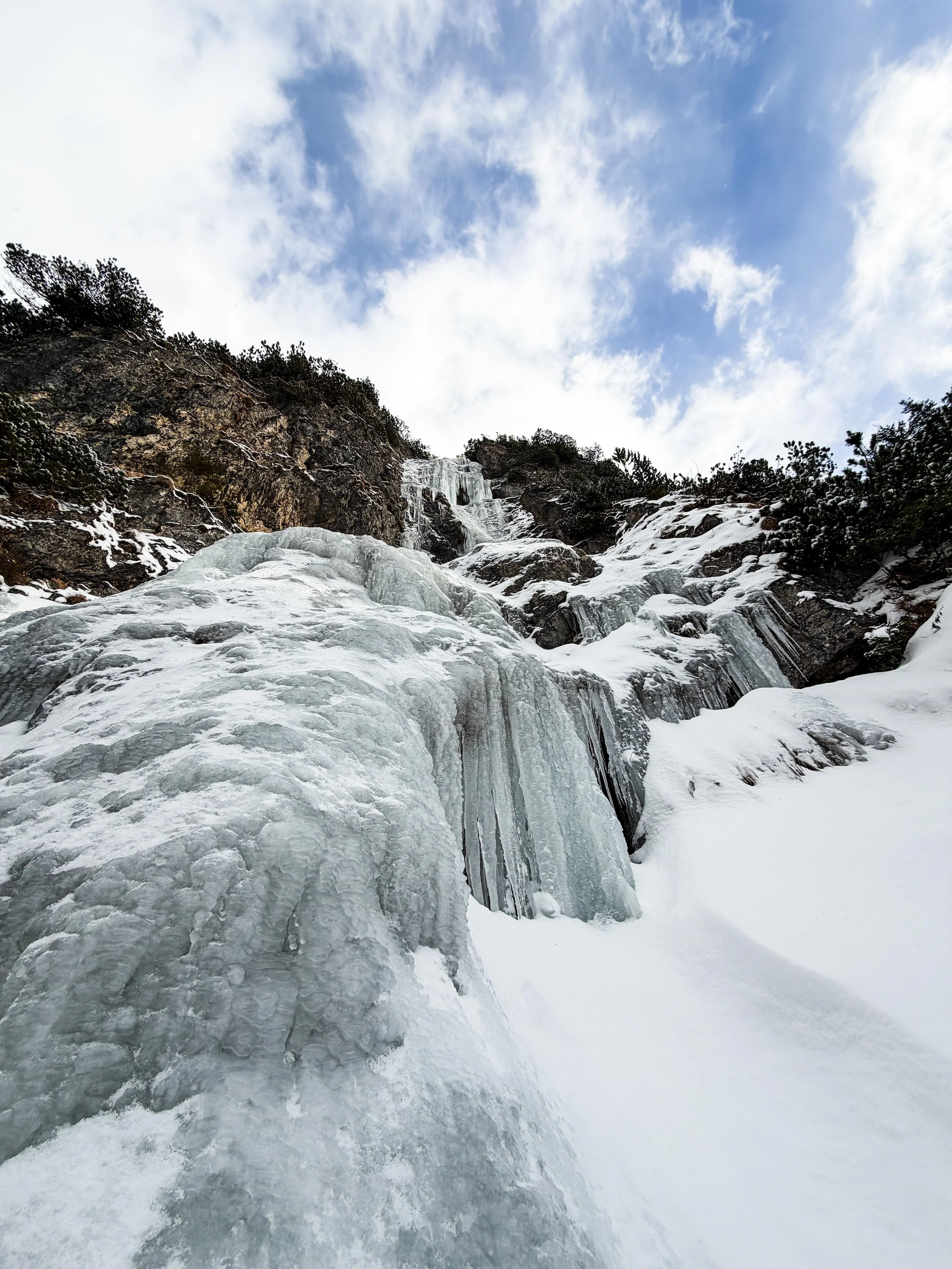
The trailhead to the valley is at Lysa Polana on the Slovakian boarder. Another €15 for parking and we were away on the trail, keeping our eyes left for any sign of ice. The guidebook I have wasn’t very clear about exactly where the ice was, and I now understand why. Provided you keep looking high and left you will find it. Right after the first bridge we saw the first dribbles of ice high up on the wall. Another 15 or 20 minutes later we saw a thicker lower angle formation we decided to go have a closer look at. This climb is called: Mrozekov Lad.
The ice at the base felt quite thin and wet, but lower angle than our Slovakian day earlier, so off I led, up the easy pitch to the steep stuff, where I found the steeper ice to also be in a simmilar thin and hollow state. I decided that given my experience, it would not be worth leading on further in it’s current condition as a fall may have ripped out the ice screws with the state of the ice. I built an anchor with two v-threads and screw (4 feet away from two lovely bolts I hadn’t spotted) and we top-roped the easy ice for the rest of the afternoon.
Day 5: Guided By Maciek
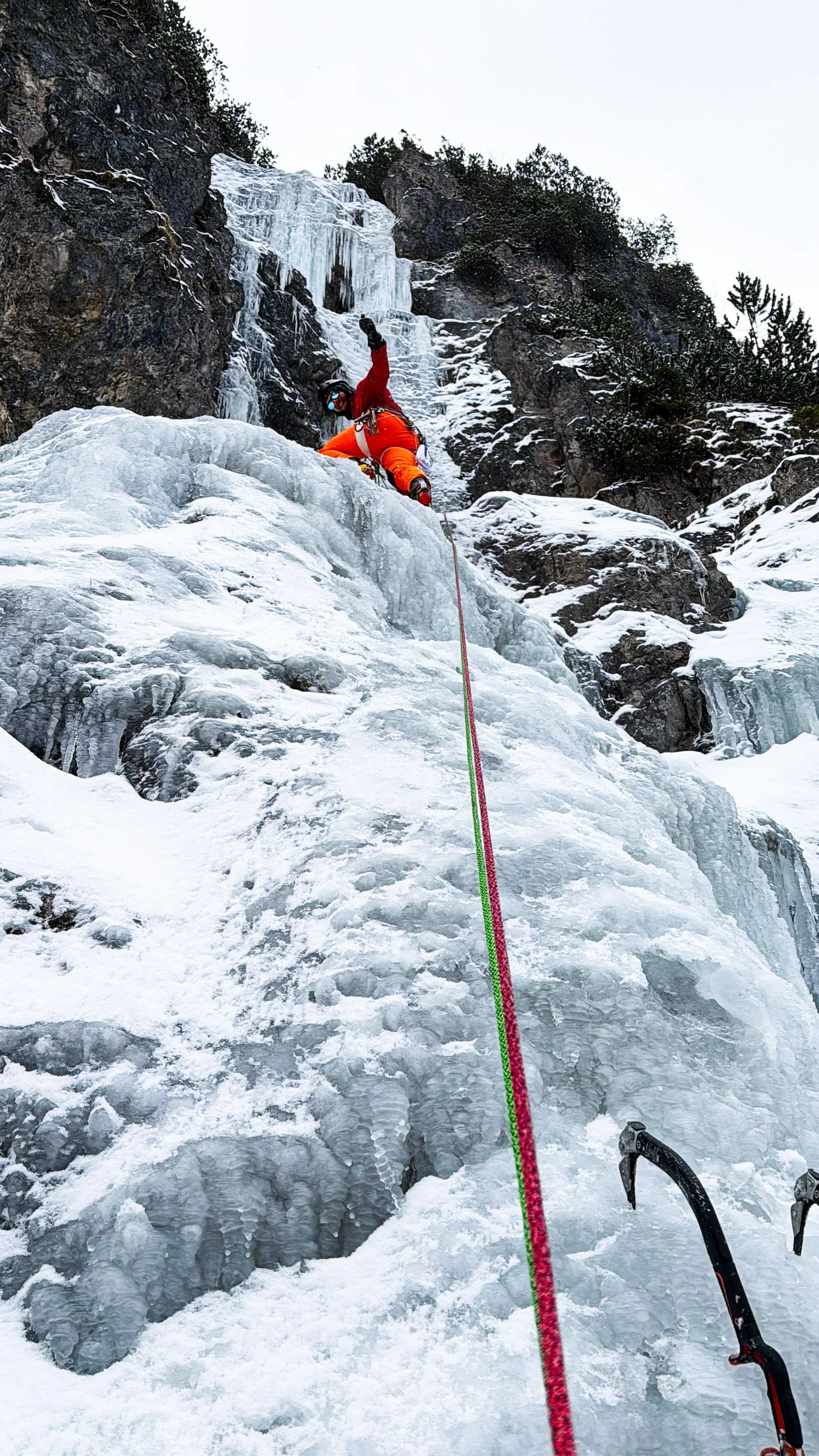
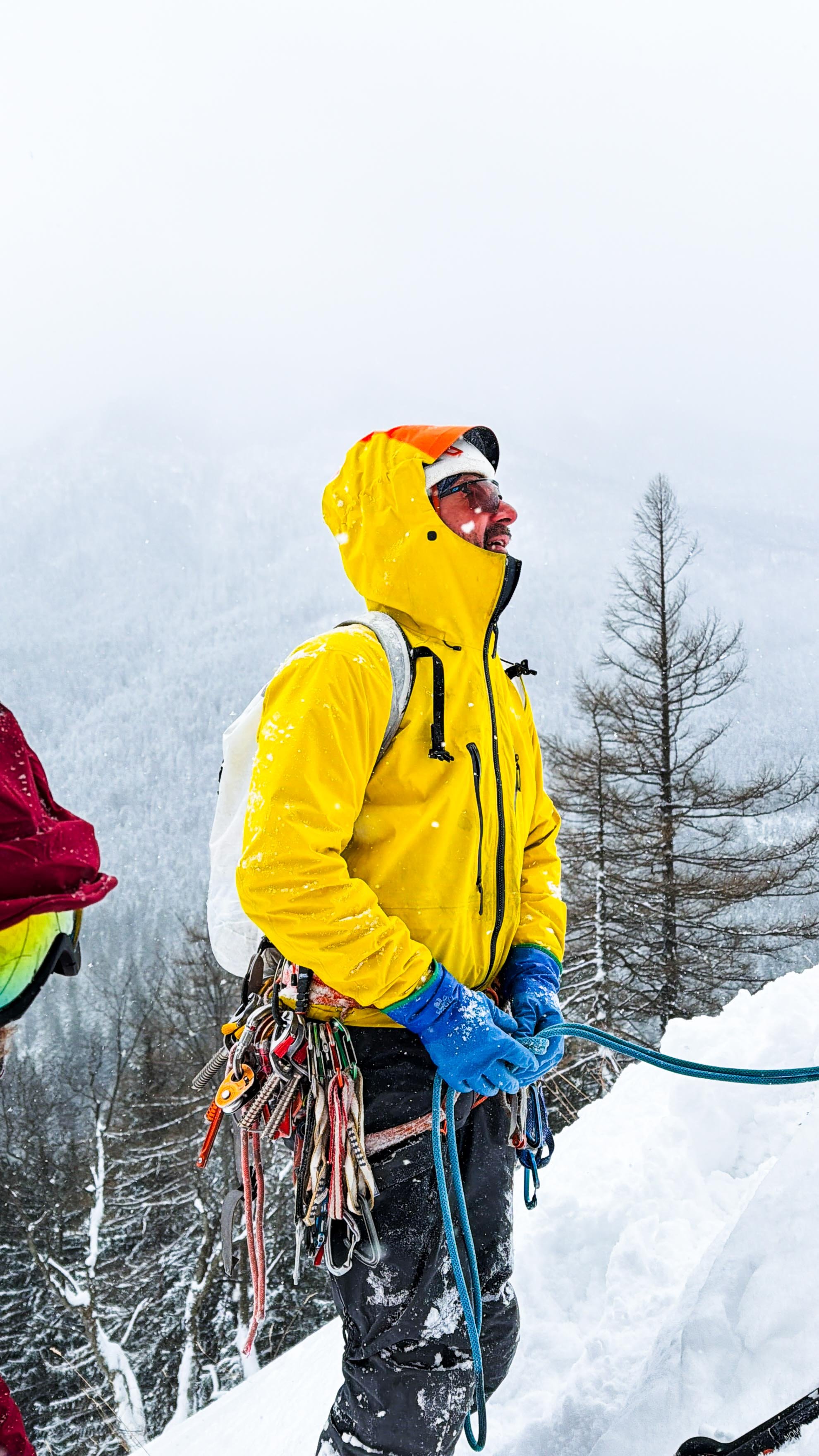
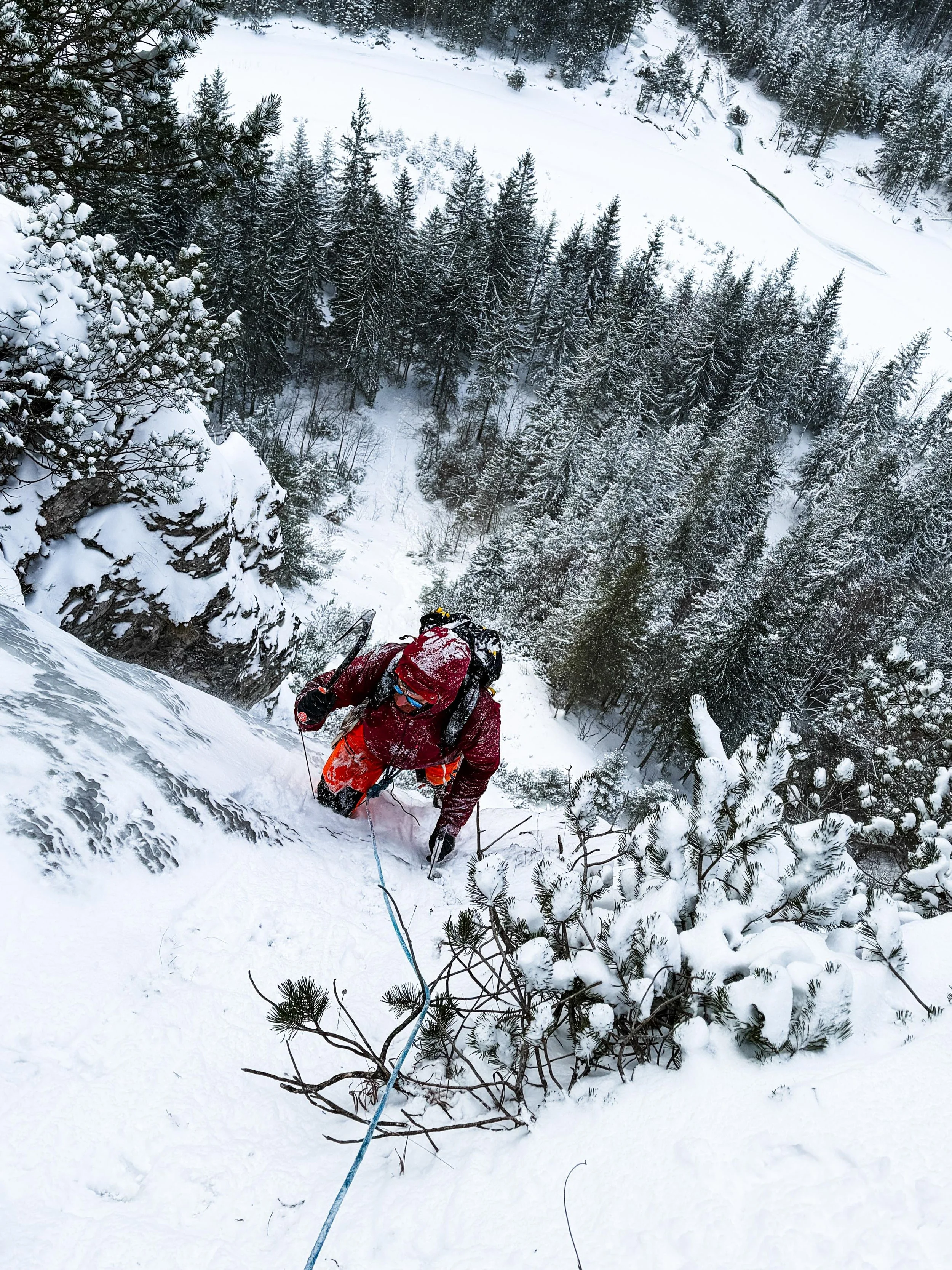
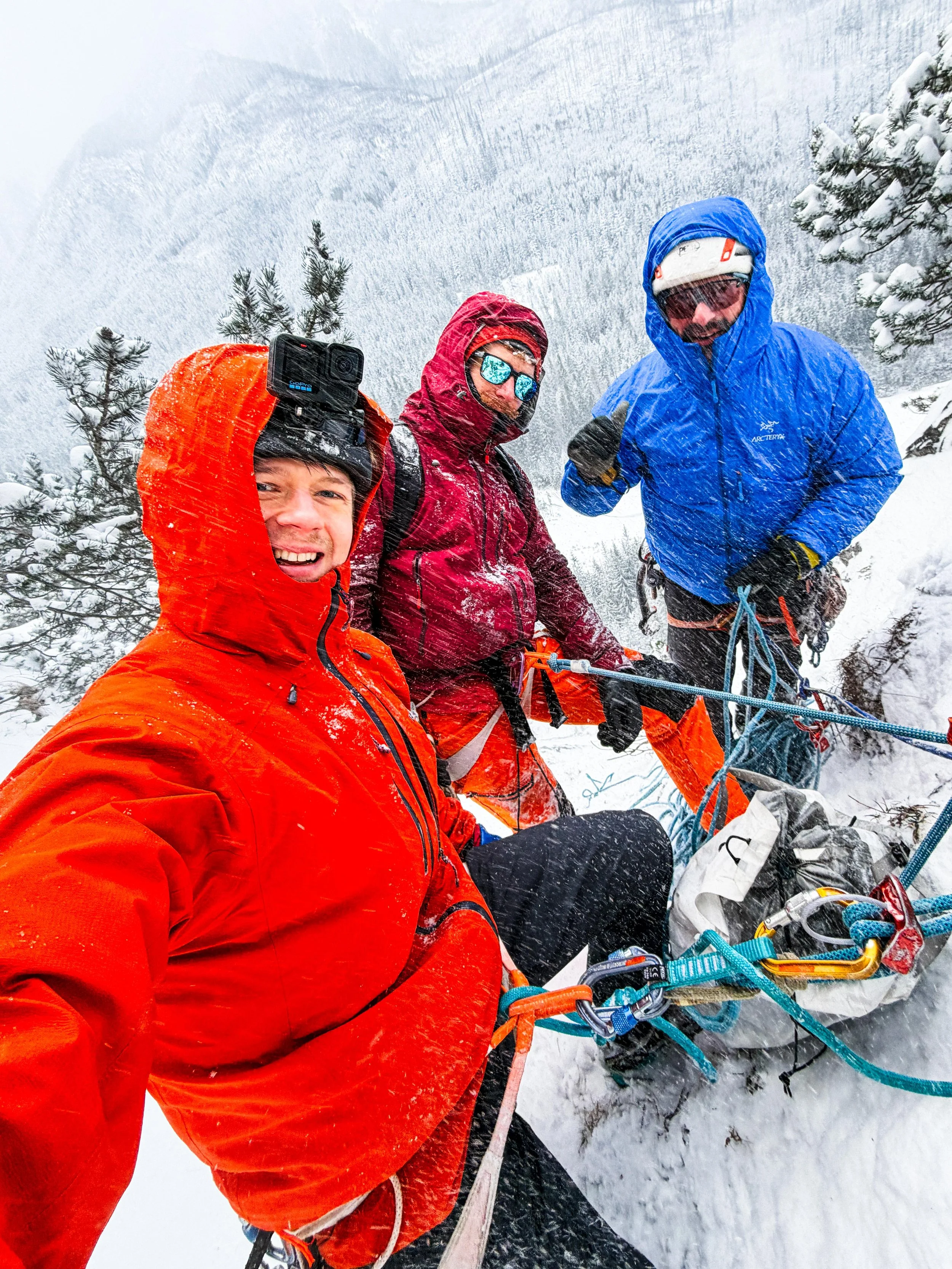
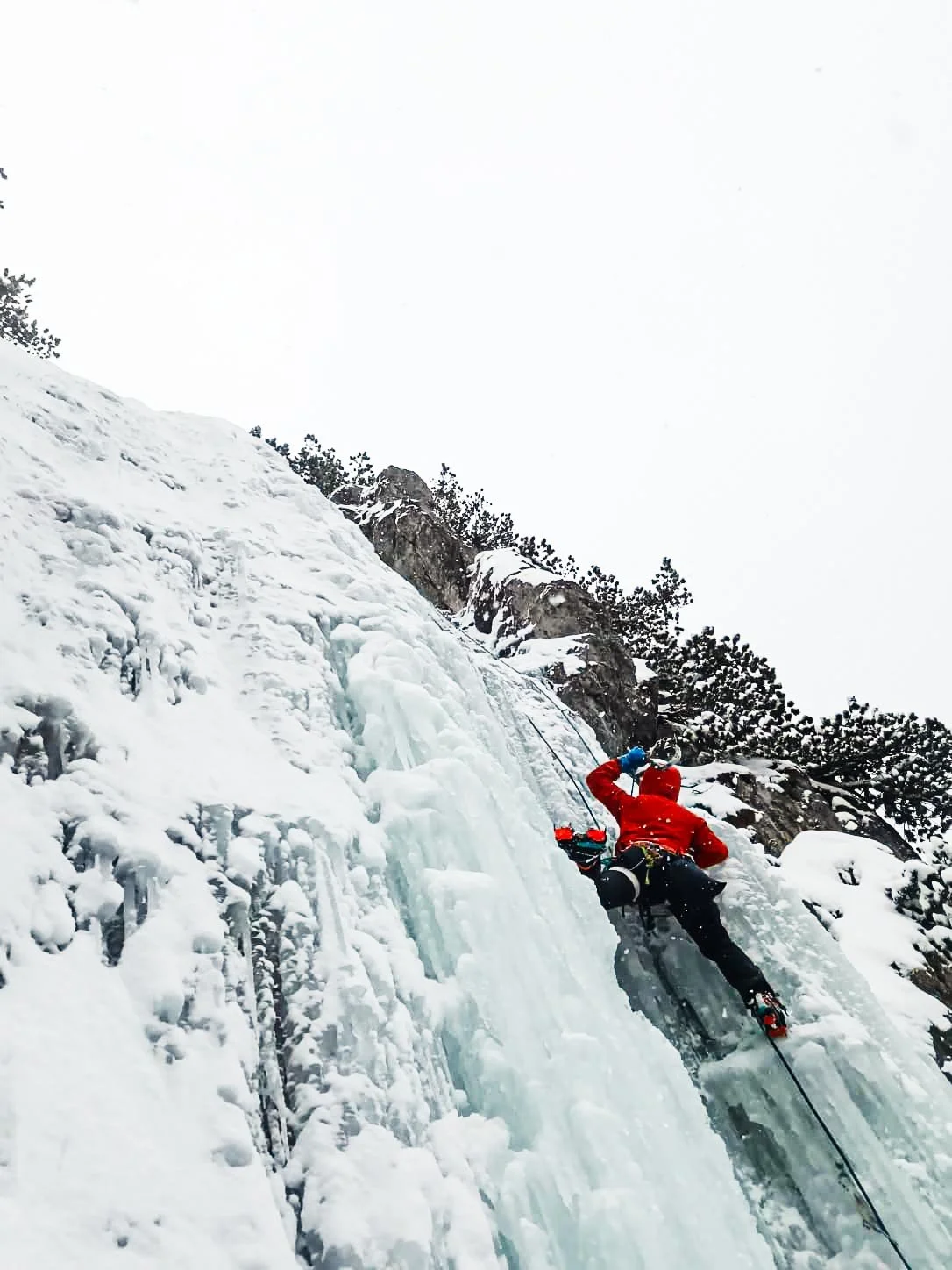
Maciek Ciesielski was the first guide to take me climbing in the montains and he has guided me on many days in the mountains since, teaching me a lot along the way. He had a day available and Richard and I jumped on the opportunity to go climb something harder with Maciek at the sharp end. We headed back to the Biala Woda Valley in search of harder ice, but the prior night’s snowfall had made the initially planned route unclimable. So back to Mrozekov Lad we went, to finish what I couldn’t finish the day before.
Up he went in the soft, wet ice. Making it look easy as ever. Richard and I followed, one by one, enjoying the experience of climbing ice of a more sustained angle. The second pitch began with an incredible formation of two columns, climbed with two tools and one crampon in one column and a stemming karate kick to the left with the remaining foot. It was a magical pitch, and I am glad I didn’t lead further on this climb after feeling the state of the ice on this day. Slowly slowly as my experience grows, I’ll inch my way up the grades. The consequences of errors with this stuff are quite high, and I would like to be playing in the mountains and in the workshop for a very long time to come.
Day 6: Wdzar Drytooling
We had a few hours to climb in the morning before Richard’s flight. The key was to find something with a short approach. The Wdzar Quarry drytooling site seemed like a good option. We headed North 30 minutes to Nowy Targ, turned right and over into some gorgeous countryside to find the spot. You’ll be shocked to hear the price of parking! It was free! Wehoo.
Here’s the webpage with the topo: https://drytooling.pl/baza/topo/drytool/drytooling/48-wdzar-topo
It is a cool place, very atmospheric, especially in the snow. I started leading a route and backed off after getting past the second bolt. It was a little hard for me that day, so we fixed lines to the trees above and each top rope soloed a couple of routes without the risk of taking a lead fall. It was very enjoyable climbing.
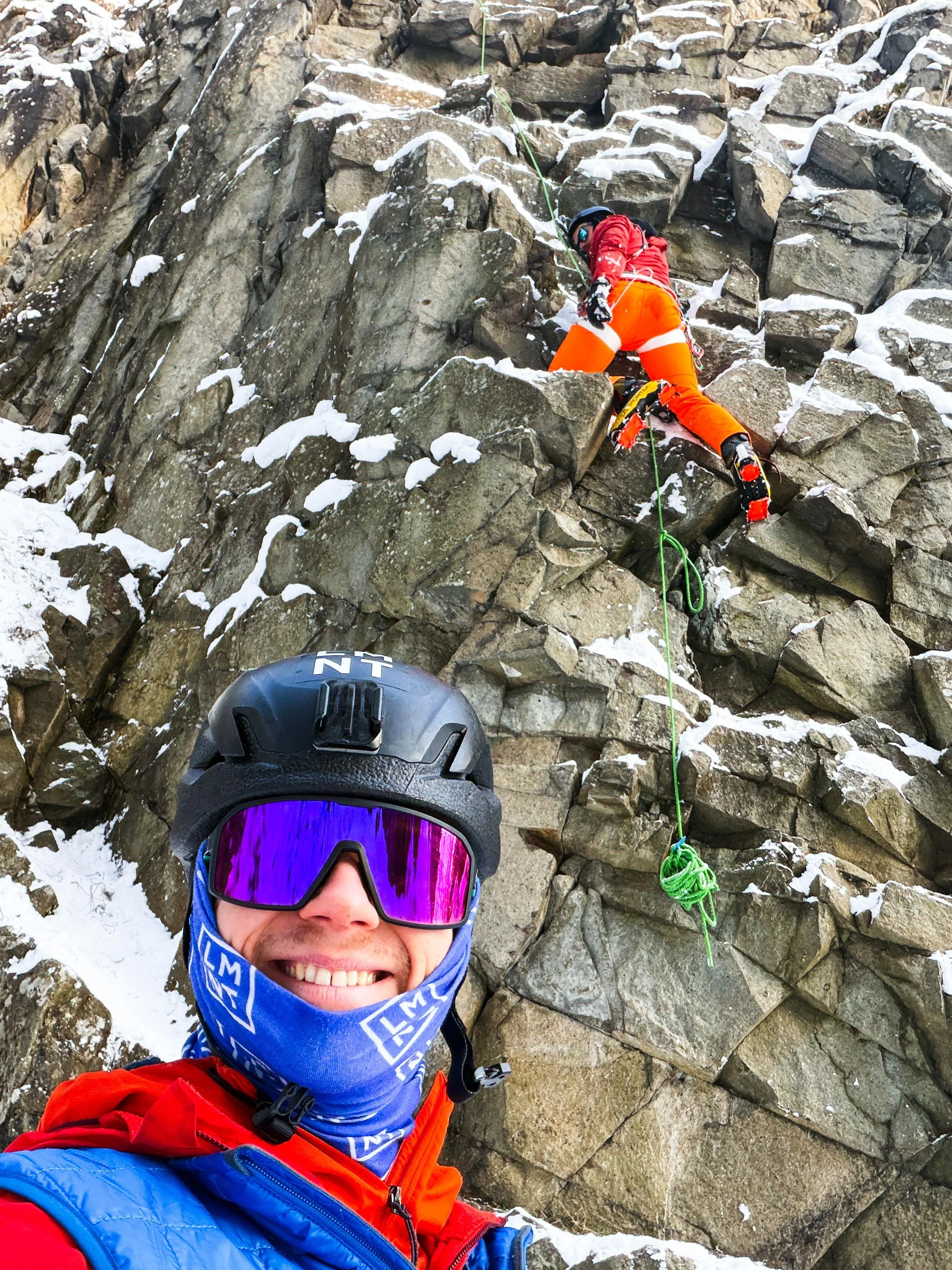
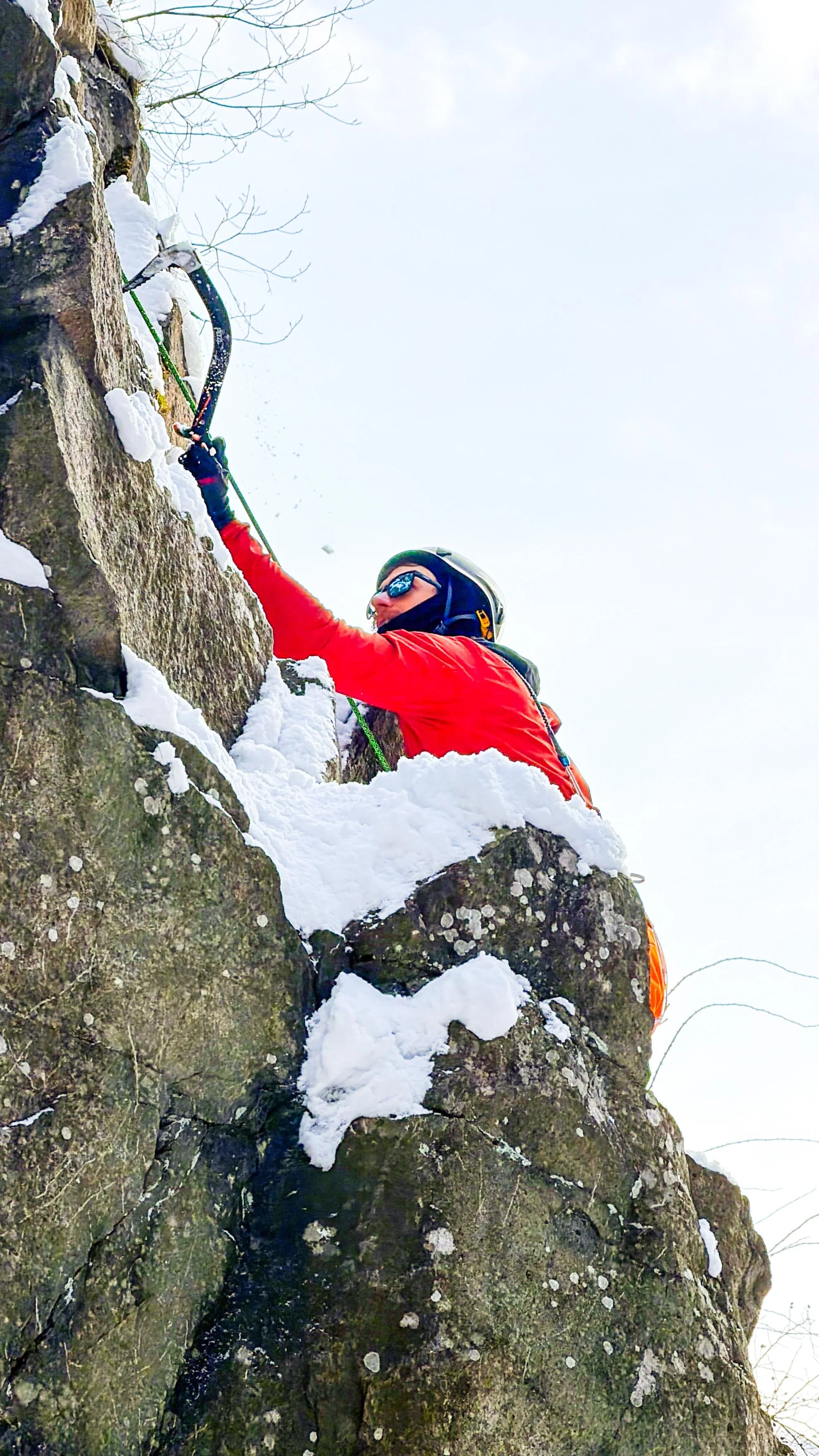
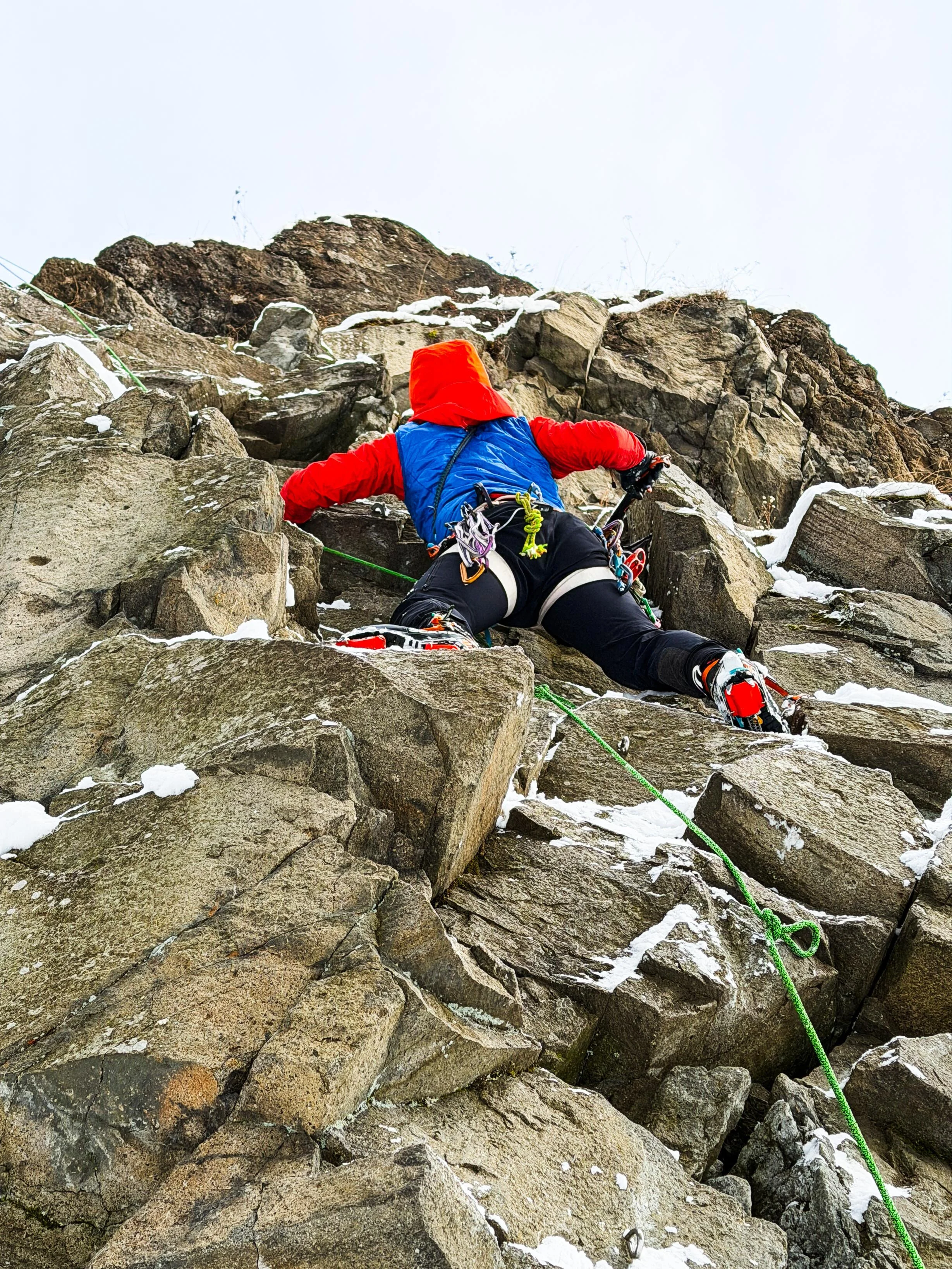
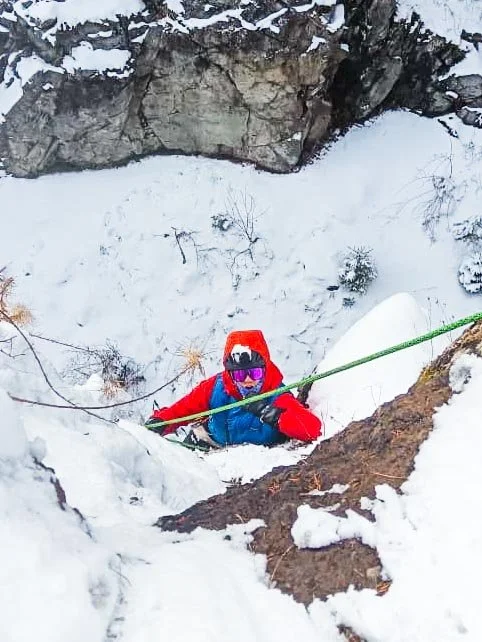
At 2pm it was time to set off and get to the airport. Thank you Richard for being a great and safe climbing partner, thank you Maciek for your day guiding and thank you to my sponsors, Squarespace and LMNT.
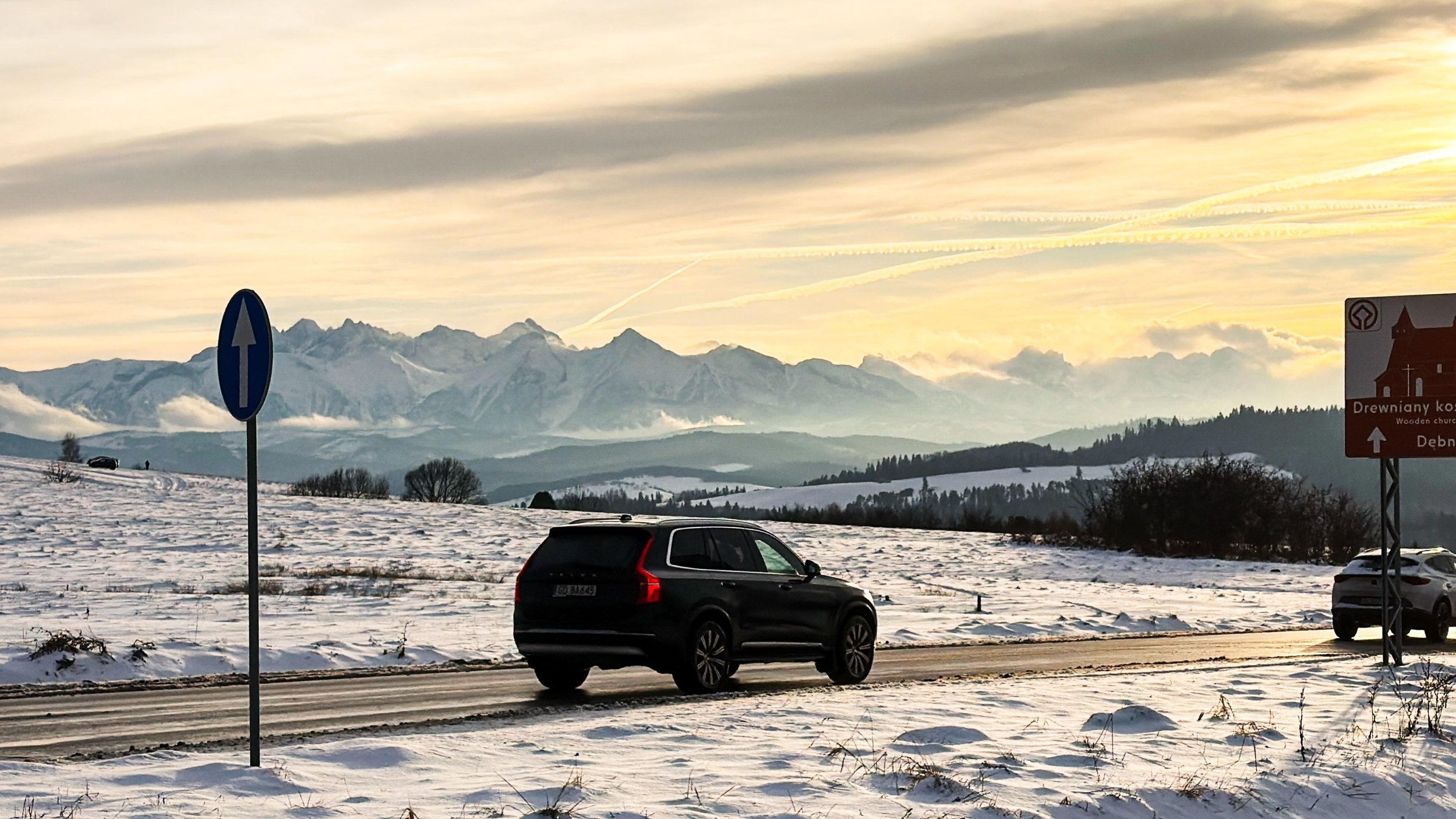
That’s a nice looking set of mountains.